10 Days in Japan with the Snow Monkeys: Tokyo, Nagano, Kanazawa and Kyoto by Rail
Tokyo, Nagano's snow monkeys, Kanazawa and Kyoto in one 10-day rail loop, with October 2026 fares, a JR Pass verdict, budgets and booking dates.
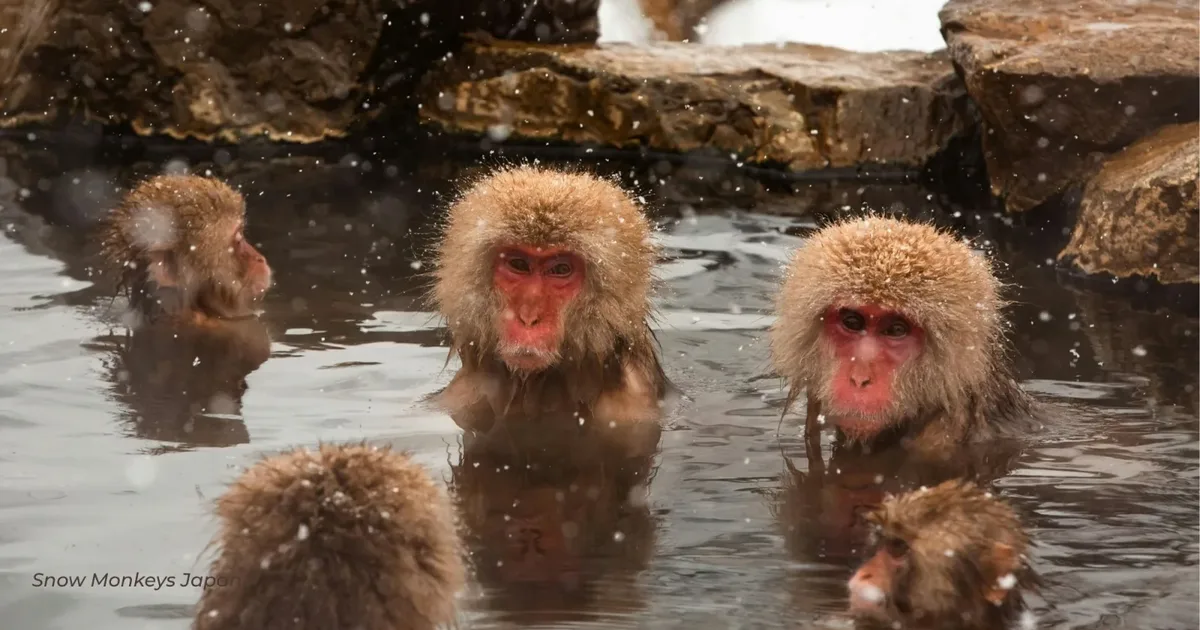
Steam drifts off a rock pool in a snowy gorge, and a macaque with frost on its eyebrows dozes in the hot water. Twenty-four hours later you are eating crab in Kanazawa’s fish market, and two days after that you are walking Kyoto’s lantern-lit lanes. Plenty of itineraries cram the snow monkeys into a long return day trip from Tokyo. This one doesn’t, because Nagano is not a dead end.
Since the Hokuriku Shinkansen reached Tsuruga in March 2024, Nagano, Kanazawa and Kyoto line up as one westbound journey. Spend a night in Shibu Onsen, reach Jigokudani at opening time, then keep going west instead of doubling back to Tokyo. You see more, backtrack less and, on current fares, pay less.
The full day-by-day plan follows, with every rail fare checked on 2 October 2026, a verdict on rail passes, rough budgets, a booking timeline and the variants you can swap in.
Quick answer
- Route: Tokyo (3 nights) → Shibu/Yudanaka Onsen (1) → Kanazawa (2) → Kyoto (3) → Tokyo by Nozomi on Day 10, or fly out of Kansai.
- Rail cost: the four JR legs come to ¥39,510 per adult (reserved seats, regular season, as of October 2026), or ¥38,290 with JR West’s ¥6,500 HOKURIKU One-way Ticket. Nagaden and local buses add about ¥4,300.
- Rail pass verdict: skip it. A 7-day Japan Rail Pass costs ¥50,000 online (¥53,000 from overseas agents since 1 October 2026), about ¥10,000 more than point-to-point tickets.
- When: late January to February gives the best odds of monkeys bathing in snow. It’s never guaranteed. Late April to June is baby season.
- Book early: Jigokudani dated web tickets go on sale 3 months ahead and get priority entry December–April. From 1 December 2026 they cost ¥880 online or ¥1,000 at the gate. Shinkansen seats open 1 month ahead.
Check Availability
What does the 10-day route look like?
It’s a one-way arc across central Honshu: north-west from Tokyo to Nagano, a short private-railway spur to the monkeys, west along the Sea of Japan coast to Kanazawa, then south to Kyoto. Total train time is roughly 9–10 hours over ten days, and no single ride is longer than about two and a quarter hours.
| Day | Base | Highlights | Main transport | Overnight |
|---|---|---|---|---|
| 1 | Tokyo | Arrive; Ueno or Ginza evening | Airport train/bus | Tokyo |
| 2 | Tokyo | Asakusa, Harajuku, Shibuya, Shinjuku | Metro | Tokyo |
| 3 | Tokyo | Free day or day trip; send big bags to Kyoto | Metro/JR | Tokyo |
| 4 | Nagano → Shibu | Zenko-ji, onsen crawl | Hokuriku Shinkansen + Nagaden | Shibu/Yudanaka |
| 5 | Shibu → Kanazawa | Snow monkeys at opening, then west | Bus + Nagaden + Shinkansen | Kanazawa |
| 6 | Kanazawa | Kenroku-en, Higashi Chaya (or Shirakawa-go) | Bus/on foot | Kanazawa |
| 7 | Kanazawa → Kyoto | Nagamachi, Fushimi Inari at dusk | Shinkansen + Thunderbird | Kyoto |
| 8 | Kyoto | Kiyomizu-dera, Higashiyama, Gion | Bus/on foot | Kyoto |
| 9 | Kyoto | Arashiyama at dawn, Nara | JR | Kyoto |
| 10 | Kyoto → Tokyo | Departure | Nozomi (or train to KIX) | — |
Why west, not back through Tokyo? Doubling back (Nagano → Tokyo → Kyoto) costs ¥8,450 + ¥14,170 = ¥22,620 and takes about 4 hours including the change in Tokyo. Heading west (Nagano → Kanazawa → Kyoto) costs ¥9,170 + ¥7,720 = ¥16,890, takes about 3–3.5 hours and gives you two nights in Kanazawa. Going west is cheaper and quicker, and you see one more city.
How should you spend Days 1–3 in Tokyo?
Stay near Tokyo Station or Ueno. Every Hokuriku Shinkansen to Nagano stops at both, which makes Day 4 easy.
Day 1: Arrive. Set up a Suica on your phone (or buy a card), get your eSIM working and take the airport train or bus into town. In the evening, wander Ameyoko market under the Ueno tracks or Ginza’s lit department stores, and get to bed early.
Day 2: Classic Tokyo. Senso-ji in Asakusa before 8:00, while the lanes are quiet. Meiji Jingu and Harajuku after lunch, Shibuya Crossing at dusk, then Shinjuku’s Omoide Yokocho and the free observation deck at the Tokyo Metropolitan Government Building. For neighbourhood detail, see our Tokyo itineraries.
Day 3: Free day or day trip. Go deeper into Tokyo (Yanaka, Tsukiji outer market, teamLab) or take one of the best day trips from Tokyo.
The luggage trick. Tonight, send your big suitcase by Yamato TA-Q-BIN straight to your Kyoto hotel and carry only a daypack for the next three nights. Ryokan corridors, Nagaden stairs and a snowy forest trail are all much easier without a 25 kg case. Tokyo–Kansai is usually next-day delivery, and hotels routinely hold bags for arriving guests. Ask yours to confirm.
Yamato TA-Q-BIN rates (cash, as of October 2026; check before you travel)
Size Tokyo → Kyoto Kanazawa → Kyoto 120 ¥2,170 ¥2,040 140 ¥2,780 ¥2,630 160 ¥3,160 ¥3,020 Drop the bag at a Yamato office or a partner convenience store and it’s ¥100 less. Yamato’s Japanese rate table is the current one. Some English pages still show older, lower prices.
How do you get from Tokyo to Shibu Onsen on Day 4?
Take a mid-morning Hokuriku Shinkansen to Nagano (from about 80 minutes, ¥8,450 reserved), see Zenko-ji, then take the Nagaden limited express to Yudanaka (about 45 minutes, ¥1,760) and check in to a Shibu Onsen ryokan by late afternoon.
- Morning: Kagayaki trains are the fastest and are all-reserved. Hakutaka and Asama trains are slower but have non-reserved cars (¥7,920).
- Midday: Zenko-ji is a short bus ride or about 30 minutes’ walk from Nagano Station. The grounds are free. The inner sanctuary plus the pitch-black Okaidan tunnel under the main hall costs ¥800, and a set ticket covering the Sanmon gate, sutra hall and history museum costs ¥1,500. Have soba for lunch along the approach. More on the temple in our Nagano day trip guide.
- Afternoon: Nagaden limited express to Yudanaka. No JR pass covers Nagaden. From Yudanaka it’s a short taxi ride or ryokan pick-up to Shibu.
- Evening: Put on a yukata and go round Shibu’s nine public bathhouses. Only overnight guests in Shibu get the key. Our Shibu Onsen guide explains how it works.
- Where to sleep: Shibu Onsen for atmosphere, Yudanaka for convenience and lower prices. If you want names to start from, Shibu Onsen KOKUYA is a ryokan with private baths, and Yorozuya in Yudanaka has the Momoyama bath. More picks, with prices, are in our guide to where to stay near the Snow Monkey Park.
Fact box: Tokyo → Nagano → Yudanaka (as of October 2026; check before you travel)
- Hokuriku Shinkansen Tokyo–Nagano: ¥8,450 reserved · ¥7,920 non-reserved · ¥8,250 as a reserved e-ticket on Eki-net (fares after JR East’s 14 March 2026 revision)
- Peak season +¥200, busiest peak +¥400, off-peak −¥200 (reserved seats only)
- Nagaden Nagano–Yudanaka: ¥1,660 + ¥100 limited-express ticket = ¥1,760, about 45 min (local trains 60–80 min)
- Nagano Prefecture accommodation tax: ¥200 per person per night from 1 June 2026, unless the room-only rate is under ¥6,000. Many onsen towns also charge a small separate bathing tax.
- Step-by-step options are in how to get to Jigokudani Monkey Park from Tokyo.
Snow Monkey Passes? Nagaden’s 1-day pass bundles rail, the local bus and park entry. It suits a return day trip from Nagano, not this overnight split, where you ride to Yudanaka on Day 4 and see the monkeys on Day 5. Winter 2026–27 prices have not been announced yet. Last winter’s were ¥5,100 (train version) and ¥6,800 (express-bus version).
How do you see the snow monkeys and still reach Kanazawa on Day 5?
Catch an early local bus so you’re at the gate when Jigokudani opens at 9:00 (November–March hours). Allow about 3 hours for the round trip from Shibu, then head back to Nagano and take the Shinkansen west. You’ll be in Kanazawa by mid-afternoon.
- Early morning: Local bus from Yudanaka to the Snow Monkey Park stop (¥390, about 10 minutes; check the fare chart on board), or a short taxi from Shibu. Then walk the forest trail: about 1.6–2 km, 30–40 minutes each way, and longer on snow. It’s unpaved, with stairs and slopes, and isn’t suitable for wheelchairs or strollers.
- At the park: Spend an hour or so. Full detail is in the Jigokudani Snow Monkey Park guide.
- Late morning: Back down to Yudanaka, then Nagaden to Nagano.
- Afternoon: Hokuriku Shinkansen Nagano → Kanazawa, about 65–90 minutes depending on the train, ¥9,170 reserved.
- Evening: Winter crab and kaisen-don around Omicho market, then a quiet walk through Higashi Chaya when the teahouse lanes are lit and nearly empty.
Fact box: Jigokudani tickets (as of October 2026; check before you travel)
- Until 30 Nov 2026: adults ¥800, children ¥400, pre-school children free with a guardian.
- From 1 Dec 2026: ¥880 for an online (Webket) ticket or ¥1,000 at the gate (children ¥440 / ¥500), according to the park’s 20 September 2026 notice.
- Web tickets are date-specific and go on sale 3 months before the visit date. December–April, web-ticket holders get priority entry. Without a ticket you may have to wait, and on crowded days you may be refused entry.
- Hours: Nov–Mar 9:00–16:00, Apr–Oct 8:30–17:00. Open every day, but the park may close without notice in bad weather.
- AFP reported in June 2026 that the park was considering a cap of about 2,000 visitors a day. The park itself has not announced a number.
- At the gate: credit cards and e-money accepted; QR-code payments not.
About the bathing. The monkeys bathe when they choose to, and they are wild animals, not a show. On mild or sunny days they may stay out of the pool. Late January to February gives the best odds, and why the monkeys bathe explains the reasons. If seeing them in the water matters most to you, use the two-nights-in-Shibu variant below as weather insurance.
Tour or DIY? If you’re already sleeping in Shibu, DIY is easy and cheaper. Book a guided tour if you’d rather skip the overnight, want a guide who can explain troop behaviour, or don’t want to manage winter bus connections.
Disclosure: Some links on this page are GetYourGuide affiliate links. If you book through them we may earn a commission at no extra cost to you.
GetYourGuide sells several types of snow monkey tour, from small-group trips out of Nagano to private guides and full-day tours from Tokyo. On this route, the Snow Monkeys & Snow Fun in Shiga Kogen day tour (from $164 per person, rated close to 5/5 from 55 reviews) picks up in Nagano City or at Yudanaka Station and includes lunch, so it fits the two-nights-in-Shibu variant. If you’d rather skip the overnight, the Tokyo private Snow Monkey Park and Nagano day trip (from $102 per person, 4.9/5 from 220+ reviews) collects you in Tokyo. A group of up to six can share the Nagano Snow Monkey and Zenko-ji private tour (from $443 per group, 4.8/5 from 80 reviews). We compare them in which snow monkey tour from Tokyo is right for you.
Fact box: Nagano → Kanazawa (as of October 2026; check before you travel) ¥9,170 reserved, regular season (¥4,120 fare + ¥5,050 express charge, after the March 2026 revision). About ¥8,640 non-reserved on trains that have non-reserved cars (Kagayaki has none). Peak season +¥200, busiest peak +¥400, off-peak −¥200.
What should you do with your two days in Kanazawa?
Spend one full day in the city: Kenroku-en, the castle park, the contemporary art museum and the old teahouse districts. On the second day, either slow down or take a bus to Shirakawa-go’s thatched farmhouses.
Day 6, city option
- Morning: Kenroku-en in winter, when its pines wear yukitsuri rope cones to protect the branches from heavy snow. Kanazawa Castle Park is next door.
- Afternoon: The 21st Century Museum of Contemporary Art, then gold-leaf ice cream in Higashi Chaya.
- Evening: The riverside lanes of Kazuemachi and an izakaya pouring Noto sake.
Day 6, Shirakawa-go option. Hokutetsu/Nohi highway buses from Kanazawa Station take about 75–90 minutes and cost ¥2,800 one way. All seats must be booked in advance; Japan Bus Online takes bookings in English. In daytime the village works as an easy day trip. If you’d rather have a guide and a reserved seat in one booking, the Kanazawa: World Heritage Shirakawa-go Morning Guided Tour (from about $76 per person, 4.9/5 from more than 1,700+ reviews) runs a round trip from Kanazawa in daytime.
The 2027 light-up is a different matter. The 41st Shirakawa-go Light-Up runs on 11, 17, 24 and 31 January 2027, 17:30–19:30, and every visitor needs a booking. Nobody gets in on the day without one. The first round of car-park reservations sold out on 10 September 2026. For most travellers, the realistic ways in are:
- Lodging lottery for a farmhouse stay, with applications 1–31 October 2026 and results on 10 November.
- Light-up bus tours sold by the route-bus operators from 13 October to 2 November 2026, and by travel agencies from 2 December.
- Second round of car-park bookings from 1 December 2026, 13:00. This only matters if you’re driving.
These dates are as reported by watabi.org from the official announcement. Check the Shirakawa-go Tourist Association before you plan around them. A tour from Kanazawa or Takayama only gets you in on light-up nights if its listing clearly says light-up entry is included. Many “light-up” tours cover only the village in daytime.
How do you get from Kanazawa to Kyoto on Day 7?
Take the Hokuriku Shinkansen to Tsuruga, then change to the Thunderbird limited express for Kyoto. The trip takes about 2 hours in total and costs ¥7,720 reserved through-fare. Foreign visitors who bought JR West’s HOKURIKU One-way Ticket before they arrived pay ¥6,500.
- Morning: The samurai lanes of Nagamachi, then a sushi breakfast at Omicho.
- Midday: Train to Kyoto. The Thunderbird has no non-reserved seats, so book both legs together.
- Late afternoon: Fushimi Inari’s torii tunnels at dusk, after the day-trippers have gone.
- Where to sleep: near Kyoto Station (best for transport), Shijo-Karasuma (food) or Higashiyama (atmosphere).
Fact box: Kanazawa → Kyoto (as of October 2026; check before you travel)
- Through fare, Shinkansen + Thunderbird via Tsuruga: ¥7,720 ordinary reserved, ¥11,290 Green Car (adult, one way, regular season).
- JR West HOKURIKU One-way Ticket, Kyoto ⇄ Kanazawa: ¥6,500 adult / ¥3,250 child. For foreign passport holders entering Japan as temporary visitors. It’s sold only by select overseas travel agencies as an e-ticket exchange order: you can’t buy it in Japan, and you must exchange it within 3 months of issue. You can’t break the journey: get off at an intermediate station and the ticket becomes invalid. Book seats at a ticket machine or station office after you exchange it.
How should you spend Days 8–10 in Kyoto?
Give eastern Kyoto one full day and Arashiyama plus Nara the next. Start early on both: Kyoto’s famous sights are calm before 8:00 and packed by 10:00.
Day 8: Eastern Kyoto
- Morning: Kiyomizu-dera at opening, then down Sannenzaka and Ninenzaka before 9:30.
- Afternoon: Kodai-ji, Yasaka Shrine, Maruyama Park and the Philosopher’s Path.
- Evening: Hanamikoji and the Shirakawa canal in Gion. Keep to the public streets. Private alleys are signposted no-entry, signs warn of fines of up to ¥10,000, and you shouldn’t photograph maiko or geiko without permission. A guided evening walk in Gion is one of the few Kyoto tours that adds something, because the guide explains the etiquette as you go. The Kyoto: Gion Magical Night Walking Tour & Geisha Culture (from about $26 per person, 4.9/5 from more than 5,000+ reviews) is the most reviewed one we found.
- Getting around: The flat-fare city bus is ¥230, the Subway & Bus 1-Day Pass is ¥1,100, and on weekends and holidays the ¥500 sightseeing express buses (EX100/EX101) run from Kyoto Station toward Kiyomizu-dera and Ginkaku-ji (as of October 2026; check before you travel). Kyoto has reported plans to charge non-residents a higher bus fare from fiscal 2027. If your trip is in or after April 2027, check the fares again.
Day 9: Arashiyama at dawn, then Nara
- Be in the bamboo grove by 7:30. By 10:00 it’s shoulder to shoulder.
- In the afternoon, take the JR to Nara for Todai-ji’s Great Buddha and the deer park, or go to Osaka’s Dotonbori for street food.
- Back in Kyoto, have a farewell dinner in Pontocho.
Day 10: Departure
- Back to Tokyo: The Nozomi takes about 2 h 15 min and costs ¥14,170 reserved (regular season). Allow at least 4 hours between leaving Kyoto and a Haneda flight, more for Narita.
- Open-jaw: If you can fly home from Kansai (KIX), skip the Nozomi. JR West’s HARUKA One-way Ticket from Kyoto to the airport costs ¥2,200 for foreign visitors; check JR West’s page for how to buy it.
- Tax-free shopping: If you shop on or after 1 November 2026, you pay the tax-inclusive price and get the refund after customs checks the goods when you leave Japan. Keep the goods unused and with you, and allow time at the airport.
Should you buy a rail pass for this itinerary?
No. Point-to-point tickets cost ¥39,510 for the four JR legs, or ¥38,290 with the HOKURIKU One-way Ticket. Every pass that could cover this route costs more.
| Option | Adult price | Covers this route? | Real cost of the four JR legs | Verdict |
|---|---|---|---|---|
| Point-to-point, reserved, regular season | ¥8,450 + ¥9,170 + ¥7,720 + ¥14,170 | Yes | ¥39,510 | ✅ Simple and cheap |
| Point-to-point + HOKURIKU One-way | Kanazawa–Kyoto ¥6,500 | Yes | ¥38,290 | ✅✅ Cheapest for overseas visitors |
| Japan Rail Pass, 7 days | ¥50,000 official online / ¥53,000 overseas agents | Yes, if started on Day 4 (Days 4–10). Nozomi needs a ¥4,960 supplement, or take a Hikari | ¥50,000–¥57,960 | ❌ Loses by ≥¥10,490 |
| Japan Rail Pass, 14 days | ¥80,000 / ¥84,000 | Yes | ¥80,000+ | ❌ Far too much |
| Hokuriku Arch Pass, 7 days | ¥35,000 | Tokyo–Nagano–Kanazawa–Kyoto only, not the Tokaido Shinkansen | ¥35,000 + ¥14,170 = ¥49,170 | ❌ The covered legs cost only ¥25,340 at full fare |
| JR EAST PASS, 5 days | ¥35,000 | Tokyo–Nagano only (JR East territory) | — | ❌ Wrong shape |
| JR TOKYO Wide Pass, 3 days | ¥16,000 | No. Its Hokuriku Shinkansen coverage stops at Sakudaira, short of Nagano | — | ❌ Not for this route |
Prices as of October 2026; check before you travel. Japan Rail Pass prices are from JR’s 9 April 2026 announcement. The official online site’s lower prices are described as “for a limited time”. GetYourGuide resells the Japan Rail Pass (4.8/5 from more than 650+ reviews) at agent prices. No JR pass covers Nagaden or the Jigokudani buses.
Verdict: Buy point-to-point tickets: Eki-net for the JR East legs and JR-West Online Train Reservation for the rest. If you’re coming from abroad, buy the HOKURIKU One-way Ticket from an overseas agent before you fly. A JR Pass only starts to pay off if you add long extra legs, such as Hiroshima, within the same 7-day window.
Can you get a discount? The regular Eki-net Shinkansen e-ticket takes ¥200 off reserved seats (Tokyo–Nagano ¥8,250). JR East’s Tokudane Special 28 (50% off) is a short-lived promotion: weekdays only, on limited trains, on 7–17 December 2026 (the 14–27 October window has already closed for sale), sold from one month to 28 days before travel. If your dates fall inside that window, check Eki-net. Otherwise, budget for the regular fare.
How much does a 10-day Japan trip with the snow monkeys cost?
Roughly ¥170,000–¥200,000 per person on a budget, ¥340,000–¥400,000 mid-range and ¥960,000 or more for luxury, excluding international flights. Only the rail fares below are confirmed. Everything else is our estimate for two people sharing.
| Category | Budget | Mid-range | Luxury | Notes |
|---|---|---|---|---|
| JR rail (4 legs) | ¥38,290 | ¥39,510 | ¥55,000+ (Green Car) | Confirmed fares above |
| Nagaden, buses, city transit, airport | ¥15,000 | ¥18,000 | ¥35,000+ (taxis) | Nagaden ¥1,760; local bus ¥390 |
| Accommodation, 9 nights | ¥65,000–¥90,000 | ¥160,000–¥220,000 | ¥500,000+ | Estimate. The Shibu ryokan with kaiseki dinner is usually the priciest night |
| Food | ¥35,000 | ¥80,000 | ¥200,000+ | Estimate |
| Sights and experiences | ¥12,000 | ¥30,000 | ¥80,000+ (private guides) | Jigokudani ¥880 online from 1 Dec 2026; Zenko-ji ¥800–¥1,500 |
| Taxes and luggage | ¥6,000 | ¥10,000 | ¥90,000+ | Departure tax, lodging taxes, Yamato |
| Total (estimate) | ≈¥170,000–¥200,000 | ≈¥340,000–¥400,000 | ≈¥960,000+ | — |
Taxes to plan for (as of October 2026; check before you travel)
- Departure tax: ¥3,000 per person for departures from 1 July 2026, usually included in your air fare. Tickets issued before 1 July 2026 keep the old ¥1,000 rate. Under-2s are exempt.
- Kyoto City accommodation tax (from 1 March 2026), per person per night, based on the room-only rate excluding meals and consumption tax: under ¥6,000 → ¥200 · ¥6,000–¥19,999 → ¥400 · ¥20,000–¥49,999 → ¥1,000 · ¥50,000–¥99,999 → ¥4,000 · ¥100,000+ → ¥10,000. Three nights in a ¥100,000-a-head room adds ¥30,000 per person in tax.
- Nagano Prefecture accommodation tax: ¥200 per person per night in Shibu/Yudanaka (stays from 1 June 2026), not charged on room-only rates under ¥6,000.
- Tax-free shopping: refund system from 1 November 2026. The ¥5,000 minimum stays.
When is the best time to do this trip?
For bathing monkeys, go from late January to February. In late April to June you’ll see babies instead. Kyoto’s blossom and autumn-colour weeks are the busiest and most expensive times for the Kyoto end of the trip.
Winter version (December–March): the plan above, unchanged. Avoid New Year (late December to 3 January), when trains are full and many sights close. Lunar New Year (late January or February) is the park’s busiest spell. Snownavi reports an average of about 4,000 visitors a day from January to March, so a web ticket matters. Read the best time to see the snow monkeys before you fix dates, and check where snow is most reliable in Japan if you want to add a snowier stop.
Green-season version (April–November): same loop, longer park hours (8:30–17:00 from April to October), mossy forest walks and newborn monkeys, with the peak birth period running from late April to June. The monkeys rarely bathe when it’s warm. Book Kyoto 4–6 months out for early April blossom or mid-to-late November colour, and avoid Golden Week (29 April–5 May), when all Nozomi trains are reserved-only. In spring 2027 Zenko-ji holds its Gokaicho, 4 April–19 June 2027, a once-every-seven-years display of the temple’s hidden Buddha, which is reason enough to add an afternoon in Nagano. Expect big crowds. More month-by-month advice is in the best time to visit Tokyo.
Which variant suits you?
| Variant | Who it suits | What changes | Nights |
|---|---|---|---|
| Winter classic (this guide) | First-timers who want snow monkeys | Tokyo–Shibu–Kanazawa–Kyoto loop | 3 / 1 / 2 / 3 |
| Two nights in Shibu | Anyone who badly wants bathing monkeys | A second morning at the park as weather insurance; one fewer Kanazawa night | 3 / 2 / 1 / 3 |
| Green season | Spring and autumn travellers, families (May babies) | Same loop, longer park hours | 3 / 1 / 2 / 3 |
| Tokyo-based | Fly in and out of Tokyo, minimal packing | Monkeys as a long Nagano day trip from Tokyo; Kyoto return by Nozomi | Tokyo 6 / Kyoto 3 |
| With Hakone or Fuji | Fuji-view seekers (clearest skies are usually late autumn and winter) | Overnight in Hakone on Day 3; drop a Kanazawa night | 2 / Hakone 1 / 1 / 1 / 3 |
| Japan Alps route (Apr–Nov) | Second-timers | Nagano → Matsumoto → Takayama → Shirakawa-go → Kanazawa by train and reserved highway bus | Tokyo 2 / Shibu 1 / Takayama 1 / Kanazawa 1 / Kyoto 3 |
| Open-jaw | Anyone who can fly out of Osaka | Skip the Kyoto–Tokyo Nozomi; train to KIX | Kyoto 3–4 |
For the Alps route, check current fares and booking windows with Alpico and Nohi Bus (Matsumoto–Takayama) and Hokutetsu (Shirakawa-go–Kanazawa, ¥2,800). All of these buses need reservations.
What should you book, and when?
The snow monkeys and the Shibu ryokan come first, then trains a month out. Shinkansen and Thunderbird seats open one month ahead at 10:00 JST.
3–6 months out
- Flights. Try an open-jaw: into Tokyo, out of Kansai.
- The Shibu/Yudanaka ryokan. Winter weekends and Lunar New Year fill first.
- Kyoto accommodation, especially for spring and autumn.
- Shirakawa-go light-up (January 2027): lodging lottery in October 2026, bus tours from 13 October 2026.
3 months out
- Jigokudani dated web ticket (on sale 3 months before your visit date; see Jigokudani tickets, fees and hours).
Before you fly (overseas visitors)
- The HOKURIKU One-way Ticket from an overseas agent. You can’t buy it in Japan.
1 month out
- Shinkansen and Thunderbird seats on Eki-net and JR-West Online Train Reservation. Check whether your dates fall in a Tokudane Special 28 window.
- Highway bus seats (Shirakawa-go, Alps route).
1 week out
- Test your eSIM; add Suica to your phone wallet.
- Check the snow forecast for northern Nagano, and pack ice cleats.
- Confirm your ryokan’s dinner time and the Yudanaka Station pick-up.
The day before each move
- Send luggage with Yamato.
- Check the winter Nagaden and local bus timetables.
- Withdraw cash for rural buses and small onsen.
What should you pack for the snow monkey trail?
Waterproof boots with real tread and slip-on ice cleats. In January and February the trail is usually packed snow and ice.
- Thermal base layers, a fleece, a down jacket, a hat and gloves that work with a phone screen.
- A hood or compact umbrella, because Kanazawa’s snow often falls wet.
- A small towel and coin purse for onsen, plus about ¥10,000 in cash.
- A spare phone battery, since cold drains batteries fast.
- A telephoto lens (70–200 mm is ideal). No selfie sticks near the monkeys, and never carry food on the trail.
For more cold-weather ideas near Tokyo, see our guide to the best onsen near Tokyo.
Frequently asked questions
Is 10 days enough for Japan with the snow monkeys?
Yes. Ten days covers Tokyo, a night in Shibu Onsen for the monkeys, two nights in Kanazawa and three in Kyoto, with about 9–10 hours of train time in total.
Is it better to go Nagano → Kanazawa → Kyoto or back through Tokyo?
Go west. It costs ¥16,890 against ¥22,620 for doubling back, it’s quicker, and you get Kanazawa (fares as of October 2026).
Is the Japan Rail Pass worth it for this itinerary?
No. The four JR legs cost ¥39,510 point-to-point. A 7-day pass is ¥50,000 online or ¥53,000 from overseas agents.
Can I use the JR Pass on the Nozomi?
Only with the “Only with Japan Rail Pass” Nozomi/Mizuho Ticket, which costs ¥4,960 for Tokyo–Kyoto. Hikari trains are covered with no supplement.
Does the JR Tokyo Wide Pass cover Nagano?
No. Its Hokuriku Shinkansen coverage ends at Sakudaira.
Are there discounted Shinkansen fares to Nagano?
Only small ones most of the time. Eki-net’s e-ticket takes ¥200 off reserved seats. Tokudane Special 28 gives 50% off, but only on limited weekday trains 7–17 December 2026 (sales close 28 days ahead, so the 14–27 October window can no longer be booked).
How do I get from Kanazawa to Kyoto?
Take the Hokuriku Shinkansen to Tsuruga and change to the Thunderbird. It takes about 2 hours and costs ¥7,720, or ¥6,500 with the HOKURIKU One-way Ticket, which you can only buy from overseas agents.
When do the snow monkeys bathe most?
On cold days from late January to February. Bathing is never guaranteed.
When are the baby monkeys born?
The park gives late April to June as the peak birth period.
Do I need to book Jigokudani tickets in advance?
It’s strongly advised. Date-specific web tickets go on sale 3 months ahead and get priority entry from December to April. From 1 December 2026 they cost ¥880 online against ¥1,000 at the gate.
Should I stay overnight near the snow monkeys?
Yes, if you can. A night in Shibu gets you to the park at opening, and only overnight guests can use the nine public bathhouses.
Can I visit Shirakawa-go in winter from Kanazawa?
Yes. Reserved highway buses take about 75–90 minutes and cost ¥2,800 each way. The light-up evenings on 11, 17, 24 and 31 January 2027 are reservation-only.
How much does the trip cost per person?
Roughly ¥170,000–¥200,000 on a budget, ¥340,000–¥400,000 mid-range, or ¥960,000+ for luxury, excluding flights. These are estimates.
Do I need ice cleats for the snow monkey trail?
Strongly recommended from December to March, when the trail is often compacted snow and ice.
What new taxes affect a 2026–27 trip?
The ¥3,000 departure tax (from 1 July 2026), Kyoto’s tiered lodging tax of up to ¥10,000 per person per night, Nagano Prefecture’s ¥200 lodging tax, and the tax-free refund system from 1 November 2026.
Practical info
Verified 2 October 2026 (park fees re-checked 28 October 2026)
- Tokyo–Nagano ¥8,450 · Nagano–Kanazawa ¥9,170 · Kanazawa–Kyoto ¥7,720 (¥6,500 HOKURIKU One-way, overseas sale only) · Kyoto–Tokyo Nozomi ¥14,170. All adult, ordinary reserved, regular season.
- Nagaden Nagano–Yudanaka ¥1,760 by limited express · local bus to the Snow Monkey Park stop ¥390
- Jigokudani: ¥800 until 30 Nov 2026; from 1 Dec 2026 ¥880 online / ¥1,000 gate (park notice of 20 September 2026). Nov–Mar 9:00–16:00, Apr–Oct 8:30–17:00
- Japan Rail Pass 7 days ¥50,000 online / ¥53,000 agent · Nozomi ticket ¥4,960 · Hokuriku Arch Pass ¥35,000 · JR TOKYO Wide Pass ¥16,000 (doesn’t reach Nagano)
- Tokudane Special 28: weekdays, 14–27 Oct and 7–17 Dec 2026 only
- Shirakawa-go bus from Kanazawa ¥2,800 (reserved) · light-up 11/17/24/31 Jan 2027, 17:30–19:30, reservation only
- Kyoto city bus ¥230 · Subway & Bus 1-Day Pass ¥1,100 · EX100/EX101 ¥500
- Departure tax ¥3,000 · Kyoto lodging tax ¥200–¥10,000 · Nagano lodging tax ¥200 · tax-free refund system from 1 Nov 2026
- Prices change. Check before you travel.
Sources
- Jigokudani Yaen-koen: visitor guide (fees, hours)
- Jigokudani Yaen-koen: fee revision notice, 20 Sep 2026
- Jigokudani Yaen-koen: web tickets
- japan-guide: Jigokudani Monkey Park
- jr-shinkansen.net: Hokuriku Shinkansen fares
- JR Group fare guide: Thunderbird + Hokuriku Shinkansen, Kyoto–Kanazawa
- JR West: HOKURIKU One-way Ticket
- JR West: Discounted one-way tickets (HARUKA)
- Tabiris: Tokyo–Kyoto Shinkansen fares
- JR Central: “Only with Japan Rail Pass” Nozomi/Mizuho Ticket
- JR Central: Japan Rail Pass price announcement, 9 Apr 2026
- JR East: new JR EAST PASS and pass revisions, 28 Jan 2026
- JR East press release: Eki-net Tokudane changes, 7 Aug 2026
- Nagaden fare revision (Dec 2025)
- Zenko-ji: visiting fees
- Watabi: Shirakawa-go winter illumination 2027
- Hokutetsu: highway buses
- KosokuBus: Kanazawa to Shirakawa-go
- Kyoto City: accommodation tax leaflet (from 1 Mar 2026)
- Nagano Prefecture: accommodation tax press release
- Pricey: Kyoto city bus fares and planned resident pricing
- Yamato Transport: TA-Q-BIN rate table (Japanese)
- Trafficnews: departure tax rise to ¥3,000
- Dosai: tax-free refund system from Nov 2026
- Snownavi: Jigokudani online tickets and crowds
See the Snow Monkeys — and Be Back in Tokyo by Evening
A private vehicle both ways, a 30-minute forest walk in, and unhurried time at the hot spring. Rated 4.9/5 by 225 guests. Free cancellation up to 24 hours before.
Check Availability & Book