Jigokudani Snow Monkey Park: The Complete Visitor Guide (2026–27)
New web tickets, December 2026 prices, the forest trail, best months and how to get there from Tokyo. A practical guide to Jigokudani Snow Monkey Park.
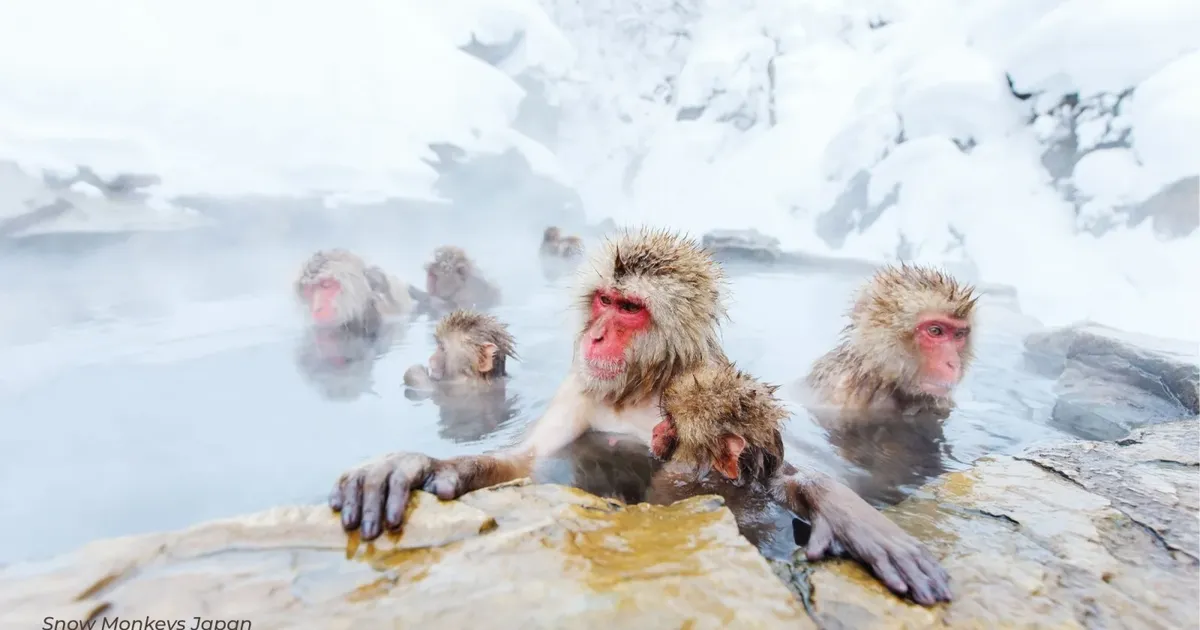
The walk in is half the magic. From Kanbayashi Onsen a cedar-lined path follows the Yokoyu River for half an hour. The air goes quiet, the snow squeaks under your boots, and then steam starts curling up the gorge. At the end, 850 metres up in a valley named “Hell’s Valley”, red-faced Japanese macaques sit shoulder-deep in a hot pool while snow settles on their heads. Visitors have been coming since the park opened in 1964. The rest of the world found out about it in 1970, when a photo of the bathing monkeys made the front page of LIFE.
What’s changed is the planning. In 2026 Jigokudani Yaen-koen started selling dated online tickets, gave web-ticket holders priority entry in winter, and announced its first price rise in years, which takes effect on 1 December 2026. If you turn up on a busy January weekend without a ticket, you could be stuck waiting at the gate or turned away.
This guide covers what you need before you book a Shinkansen seat: how the new tickets work, what you’ll pay, how the trail feels in snow, when to arrive, what each month is like, the rules, and when a tour is worth the money. For the biology, see Japan’s snow monkeys: facts.
Quick answer (as of 2 October 2026)
- Price: ¥800 adult / ¥400 child until 30 November 2026. From 1 December 2026: ¥880 online (Webket) or ¥1,000 at the gate; children ¥440 / ¥500. These new prices are reported by japan-guide from the park’s 20 September 2026 notice, so check the official site before you go. Under-6s go free.
- Tickets: dated web tickets go on sale about 3 months ahead. From December to April web-ticket holders get priority entry, and on crowded days visitors without a ticket may be refused.
- Hours: 8:30–17:00 (April–October) and 9:00–16:00 (November–March), every day. The park can close without notice in bad weather.
- The walk: about 1.6–2 km, 30–40 minutes each way from the Snow Monkey Park bus stop at Kanbayashi Onsen. Allow longer on snow. The path is unpaved, with stairs, and is not suitable for wheelchairs or strollers.
- Best odds of bathing monkeys: January and February. Monkeys are wild, so nothing is guaranteed.
- From Tokyo: Shinkansen to Nagano (from about 80 minutes), then the express bus (about 45 minutes) or the Nagaden train plus a local bus, then the walk. A day trip works, but one night in Shibu or Yudanaka Onsen is better.
Check Availability
What exactly is Jigokudani Snow Monkey Park?
It is a wildlife observation park in Yamanouchi, northern Nagano. A wild troop of Japanese macaques comes down from the forest during the day, and in cold weather many of them soak in a man-made hot-spring pool. There are no cages and no fences between you and the monkeys.
Jigokudani means “Hell Valley”, after the steep cliffs and steaming springs of the Yokoyu River gorge. Yaen-koen means “wild monkey park”. The park sits at 850 m inside Joshinetsu Kogen National Park, just below the Shiga Kogen plateau. According to the park, winter temperatures drop to around −10°C and more than a metre of snow falls. In English you’ll also see it called the Snow Monkey Park, Jigokudani Monkey Park or Jigokudani Wild Monkey Park. It is all the same place.
The operator is open about how it works. Staff put out food regularly so the troop keeps visiting, but visitors may not feed the monkeys, and no feed is sold. That is why sightings are likely on most days but never guaranteed, especially in autumn.
When is the park open?
The park is open every day of the year. Hours are 8:30–17:00 from April to October and 9:00–16:00 from November to March.
- No fixed closing days. The park may close or shut early without notice because of weather, natural disasters or other circumstances.
- Arrival time: there is no published last-entry time. The park asks visitors to arrive at least 30 minutes before closing. In winter, aim to start up the trail by about 14:30 (15:30 in summer) so you get a proper visit.
- On the morning you go: the official homepage shows the day’s hours and weather, a colour-coded crowd forecast calendar, a weekly “monkey appearance forecast” and a live camera. The park also posts updates on Facebook and X.
How much does it cost, and what changes on 1 December 2026?
Adults pay ¥800 until 30 November 2026. From 1 December 2026 the park charges ¥880 for an online (Webket) ticket or ¥1,000 at the gate (children ¥440 / ¥500), according to the park’s 20 September 2026 notice as reported by japan-guide. Check the official site before you go.
| Ticket | Until 30 Nov 2026 (official) | From 1 Dec 2026 (reported) |
|---|---|---|
| Adult (18+), web ticket | ¥800 | ¥880 |
| Adult (18+), at the gate | ¥800 | ¥1,000 |
| Child (elementary–high school), web ticket | ¥400 | ¥440 |
| Child (elementary–high school), at the gate | ¥400 | ¥500 |
| Under 6 (pre-school) | Free with a guardian | Free with a guardian |
| Group (20+) | ¥680 adult / ¥340 child | Not yet confirmed |
| Disability certificate holders | 50% off (¥400 / ¥200) | Not yet confirmed |
| Annual pass | ¥5,000 adult / ¥2,500 child | ¥6,000 adult, reported by one source (TripToJapan); child price not yet confirmed |
| School groups | ¥300 junior/senior high · ¥200 elementary | Not yet confirmed |
All prices are as of October 2026; check before you travel. There is no senior discount, and discounts can’t be combined.
Why the hedging? The park confirms on its own site that “admission fees will be revised effective December 1, 2026”, but it published the notice as an image, not text. The figures above come from japan-guide (updated 26 September 2026) and TripToJapan, both of which credit the park.
Paying at the gate: credit cards and e-money are accepted. QR-code payments (PayPay and similar) are not. Carry some cash anyway for local buses and small shops.
From December the web ticket is cheaper and gets winter priority, so buy online for any visit between December and April.
How do the new web tickets work?
The park now sells date-specific admission tickets online through the Webket platform. The official notice announcing online tickets is dated 6 August 2026, and sales started around 10 August. Tickets go on sale about three months before your visit date. From December to April, web-ticket holders get priority entry. Without a ticket you may have to wait, and on crowded days you may not get in at all.
Why the change? The park said in April 2026 that winter crowds had grown beyond what it could handle, causing long queues at the ticket booth. Snownavi reports an average of about 4,000 visitors a day from January to March. AFP reported in June 2026 that the park was considering a cap of about 2,000 visitors a day. The park itself has not announced a number.
What’s official, and what’s sales talk
- Official: tickets are dated; web-ticket holders get priority December–April; visitors without a ticket may be refused on crowded days.
- Not official: “mandatory timed entry”, fixed arrival slots and “total entry denial” for walk-ins. That wording comes from tour sellers, mainly Snow Monkey Resorts, which also sells tours with reserved entry. The park’s own word is “priority”.
- Not published: cancellation and refund rules. Read the Webket terms before you pay.
How to buy a web ticket, step by step
- Choose your date first. Check the crowd calendar and the weekly monkey forecast on the official homepage.
- Open the official web-ticket page (en.jigokudani-yaenkoen.co.jp/webticket) and follow the link to Webket. You’ll find two products: admission only, and admission plus a round-trip bus between Nagano Station and the Snow Monkey Park stop.
- Set up a Webket account if you’re asked to. Tour sellers report that an English option is available.
- Pick your visit date and the number of adults and children. Under-6s are free.
- Pay by card and keep the confirmation email.
- On the day, show your digital ticket at the entrance. Take a screenshot first, because signal in the gorge can be weak.
Tip: for a weekend between December and February, the New Year holiday (around 29 December–3 January), Lunar New Year or a Japanese three-day weekend, book the day your date goes on sale.
How do you get to the gate?
You can’t drive to the gate. Everyone walks the last stretch, and almost everyone uses the forest trail from Kanbayashi Onsen.
| Route A: forest trail from Kanbayashi Onsen | Route B: Jigokudani car park via Shibu Onsen | |
|---|---|---|
| Start | Snow Monkey Park bus stop, or the park’s free car park at Kanbayashi | ¥500 Jigokudani car park, reached on a narrow forest road from Shibu Onsen |
| Distance / time | About 1.6–2 km, 30–40 min each way (longer on snow) | About 15 min on foot |
| Terrain | Unpaved, mostly level, with a few slopes and stairs; icy in winter | Short but with steps |
| Open | All year | Road and car park closed in winter (roughly December to March); no large vehicles |
| Best for | Everyone, and the only real option in winter | Green-season drivers |
The trail. The Yumichi path was originally built to carry water for farming and hot springs. It runs through cedar forest above the river, mostly level with a climb at the start and steps near the end. Near the end you pass Korakukan, an old inn in the valley, and the steaming Jigokudani geyser before the final climb to the entrance. Keep an eye out for Japanese serows (a goat-like antelope) and squirrels.
In winter the path turns to packed snow and ice from around mid-December, and some stretches have no railing above the river. Wear snow boots and bring simple crampons or ice cleats. There is no shelter on the way.
At the trailhead, the Snow Monkey Resorts Info & Gift Shop (9:00–16:00 in winter, 8:30–17:00 in summer; open roughly October to May) rents winter boots and jackets, sells crampons, stores luggage and has English-speaking staff. Enza Cafe is next door. Use the toilets in Kanbayashi before you set off.
Driving and parking
- Kanbayashi Onsen car park: free, open all year, and the park’s dedicated car park. It fills up on winter weekends, and roadside parking in the village isn’t allowed.
- Jigokudani car park: ¥500, closed in winter (roughly December to March). Many navigation systems will send you here, so set your destination to Kanbayashi Onsen.
- Winter: the park asks visitors to use public transport and avoid private and rental cars where possible. Snow Monkey Resorts says nearby car parks close to private vehicles on peak winter weekends and holidays. We found no official notice confirming that, but it’s another reason to leave the car behind.
What’s inside the park?
There is one man-made hot-spring pool a few minutes past the entrance, with monkeys spread along the river and cliffs around it. There’s also an entrance building with a souvenir shop and lockers. That’s all, and it’s enough.
- The pool. This is where the famous photos are taken. Step a few metres back from the crowded rail and you’ll often get a better view of grooming, play and squabbles along the riverbank.
- Lockers. No food or drink is sold inside the park, and any food or drink you bring must go in a locker. The park also asks you not to eat or drink outdoors anywhere in the area. The monkeys know exactly what a plastic bag means.
- Live camera. It shows the pool in stills and streaming video, linked from the homepage. It’s handy for checking whether the monkeys are around before you set out.
How long should you spend, and when should you arrive?
Plan on about an hour inside the park and 2.5–3 hours from the bus stop and back. In winter, try to arrive between opening and about 10:00.
The park’s weekly forecasts usually show monkeys arriving between about 9:00 and 10:00 and leaving in mid-to-late afternoon. Day-trip tours from Nagano and Tokyo tend to arrive from late morning, so if you stay overnight nearby and get to the gate at opening time, you’ll have a noticeably quieter first hour. Weekends, the New Year holiday, Lunar New Year and Japanese public holidays are the busiest times.
What is the park like each month?
| Month | Snow and trail | Monkeys | Crowds | Verdict |
|---|---|---|---|---|
| Dec | Snow usually arrives; icy from mid-month | Bathing becomes regular | Rising; New Year peak | Good, especially early December |
| Jan | Usually deep snow, packed ice | Best odds of bathing | Very high on weekends | Best for the classic shot; book ahead |
| Feb | Usually the deepest snow | Best odds of bathing | Very high (Lunar New Year) | Best for the classic shot; book ahead |
| Mar | Melting, slushy, muddy | Bathing continues | High early, easing later | Good value |
| Apr | Late snow possible, then mud | Less bathing; winter priority still applies | Moderate | Mixed |
| May–Jun | Green, easy trail | Babies (born roughly late April–June) | Low–moderate; Golden Week busier | Best for babies |
| Jul–Aug | Easy; humid, insects | Active, rarely bathing | Moderate; Obon busier | Pleasant forest walk |
| Sep | Easy | Usually present | Low | Quiet |
| Oct–Nov | Autumn colour late Oct–early Nov | Least predictable; mating season | Low | Check the forecast; some no-show risk |
Snow depth varies a lot from year to year, so none of this is guaranteed. For a full breakdown, see best time to see the snow monkeys.
What are the park rules?
The rules are short and strictly enforced. Staff can ask anyone who breaks them to leave.
Jigokudani rules (official)
- No feeding, and don’t show the monkeys food.
- No touching and no shouting. That includes babies that wander close.
- Don’t stare into a monkey’s eyes. It reads as a threat.
- No pets of any kind, including guide, hearing and service dogs.
- No selfie sticks, no drones, no putting a camera into the bath, and no holding a camera or phone right up to a monkey.
- Flash is allowed under the official rules.
- No bathing in the monkey pool.
About flash: some tour sellers and blogs say flash is banned. The park’s own rules page says it’s allowed. Our advice: switch it off anyway. You lose nothing, and it’s kinder to the monkeys. Tripods aren’t mentioned in the official rules, but the viewing area is packed in winter, so leave yours at the hotel.
Is it accessible, and is it OK for kids?
The park is not accessible for wheelchairs, strollers or carts on either approach, because both have unpaved ground, steps and slopes. Children are welcome and under-6s go free.
- Limited mobility: the forest trail is mostly level but has a climb and steps. In green season, a private driver to the Jigokudani car park cuts the walk to about 15 minutes, though there are still stairs. In winter that road is closed. See private snow monkey day tours from Tokyo.
- Small children: bring a carrier, not a stroller, and hold hands near the pool and on icy stretches.
- Assistance dogs: not allowed. Plan around this before you travel.
- Other hazards: in summer the park warns about snakes, bees and thorny plants. In winter the risks are ice, unrailed drops and cold.
What should you wear and bring?
- Winter (December to early April): waterproof snow boots, crampons or ice cleats (sold at the trailhead, but it’s easier to bring your own), warm layers, hat, touchscreen gloves and a power bank, because cold drains phone batteries fast. Leave the umbrella behind and keep both hands free.
- Green season: trainers or walking shoes, a rain jacket and insect repellent.
- Always: a bag that zips (food goes in a locker), a little cash, and your ticket saved offline.
How do you get there from Tokyo and Nagano?
Take the Hokuriku Shinkansen to Nagano, then either the Nagaden express bus straight to the Snow Monkey Park stop, or the Nagaden train to Yudanaka and a short local bus. Full details are in how to get from Tokyo to the Snow Monkey Park.
| Leg | Option | Time | Cost (one way, adult, as of October 2026; check before you travel) |
|---|---|---|---|
| Tokyo → Nagano | Hokuriku Shinkansen (Kagayaki / Hakutaka / Asama) | From about 80 min | ¥8,450 reserved (¥8,250 as an e-ticket). Covered by the Japan Rail Pass and the JR EAST PASS; not by the JR Tokyo Wide Pass |
| Nagano → Snow Monkey Park stop | Nagaden express bus, East Exit stop No. 23/24 | About 45 min (allow up to 60 in snow) | ¥3,000 in winter / ¥2,000 the rest of the year. The winter season runs 5 Dec 2026–5 Apr 2027 |
| Nagano → Yudanaka | Nagaden limited express | About 45 min (local trains 60–80 min) | ¥1,660 + ¥100 limited-express fee = ¥1,760. Not covered by JR passes |
| Yudanaka → Snow Monkey Park stop | Local bus | About 10 min, at least hourly | ¥390 (check the fare chart on board); cash or IC card |
Express bus tickets: buy your ticket before boarding, at the Aruyo ticket office (Nagano Station East Exit, 1F) or online. Don’t count on paying cash on the bus.
Snow Monkey Pass (Nagaden): worth it?
- Train version: one day of unlimited Nagaden trains (including non-reserved limited express seats), a local-bus round trip and one park entry. Green season 2026: ¥4,800 adult / ¥2,400 child.
- Bus version: express-bus round trip from Nagano East Exit plus one park entry. It does not cover Nagaden trains or local buses. Green season 2026: ¥4,800 / ¥2,400.
- Winter 2026–27 prices are not yet announced. Last winter’s were ¥5,100 (train) and ¥6,800 (bus). The passes are not sold in October–November. Child fares apply to ages 6–12.
- Watch out: each pass already includes admission. If you’ve bought a dated web ticket, don’t pay for entry twice.
Driving: take the Joshin-etsu Expressway to Shinshu-Nakano IC, then Route 292 towards Shiga Kogen and park free at Kanbayashi Onsen. In winter you’ll need winter tyres, and the park asks visitors to come by public transport if they can.
Should you go on your own or join a tour?
Going on your own with a night in Shibu or Yudanaka gives the best visit. A tour that includes reserved entry is worth paying for if you’re day-tripping from Tokyo on a winter weekend or holiday.
Disclosure: Some links on this page are GetYourGuide affiliate links. If you book through them we may earn a commission at no extra cost to you.
| DIY | Group tour (from Tokyo or Nagano) | Private guide / driver | |
|---|---|---|---|
| Winter entry | You book Webket yourself | Operators usually arrange entry; check the listing | Usually arranged for you |
| Typically included | Nothing; you plan everything | Transport, guide, admission; often Zenko-ji, sake or lunch | Door-to-door, flexible stops |
| Time in the park | As long as you like | Often about an hour | Flexible |
| Best for | Independent travellers, overnight stays | First-timers on winter weekends | Families, limited mobility, photographers |
| Downside | Logistics; express-bus tickets to sort | Fixed schedule, crowds at peak time | Price |
Our picks on GetYourGuide:
- From Tokyo, private driver: the Tokyo private Snow Monkey Park and Nagano day trip is the most reviewed day trip from Tokyo (from $102 per person, 4.9/5 from more than 200 reviews). Read our breakdown.
- For a group of four or more: the Nagano/Tokyo snow monkey private day tour is priced for the whole vehicle (from $383 per group of up to six, 4.8/5 from 55 reviews).
- With Zenko-ji in the same day: the Nagano snow monkey and Zenkoji temple private tour (from $443 per group of up to six, 4.8/5 from 80 reviews).
- Group tour from Nagano: the Snow Monkeys & Snow Fun in Shiga Kogen day tour suits an overnight in Nagano (from $164 per person, rated close to 5/5 from 55 reviews).
Before you book any tour on GetYourGuide or elsewhere, check three things: is park admission included, how long do you get inside, and what happens if the park closes or the monkeys don’t turn up? We compare the options in which snow monkey tour from Tokyo is right for you.
What does a good itinerary look like?
Winter day trip from Tokyo (about 12 hours)
- 06:30–07:00: Shinkansen from Tokyo or Ueno.
- About 08:30: arrive in Nagano. Use the coin lockers near the East Exit and board the express bus with a ticket you bought in advance.
- About 09:30: reach the Snow Monkey Park stop. Put on your cleats and walk about 35 minutes.
- 10:15–11:15: in the park.
- Midday: lunch at Enza Cafe or in Yudanaka.
- Afternoon: Zenko-ji in Nagano, or a stop at Obuse on the Nagaden line.
- 17:00–19:00: Shinkansen back to Tokyo. Leave a buffer for snow delays.
Overnight (our pick)
- Day 1: Tokyo to Nagano by late morning, then Zenko-ji and the Nagaden train to Yudanaka. Check into a ryokan in Shibu Onsen and spend the evening hopping between the nine public baths in a yukata.
- Day 2: start up the trail around 8:30 and be at the gate when it opens at 9:00 in winter. You’ll get a quieter hour before the day-trippers arrive. On the way back, add Obuse (chestnut sweets and the Hokusai Museum) or a ski afternoon at Shiga Kogen.
If you’d rather someone else drove, our Snow Monkey and Zenko-ji temple tours page compares the day trips that combine both.
What else is nearby?
- Shibu Onsen: a lane of old wooden inns with nine public baths for overnight guests.
- Yudanaka Onsen: the station town, with more rooms and lower prices.
- Kanbayashi Onsen: the hamlet at the trailhead, best for an early start.
- Shiga Kogen: one of Japan’s largest ski areas, reached by bus from the Snow Monkey Park stop.
- Obuse: chestnut sweets, sake breweries and the Hokusai Museum, on the Nagaden line (¥870 from Nagano, plus ¥100 on the limited express).
- Zenko-ji: Nagano’s great temple, about 30 minutes’ walk or a short bus ride from the station. The grounds are free. The inner sanctuary and Okaidan cost ¥800, and a set ticket is ¥1,500 (as of October 2026; check before you travel).
What has changed recently?
- 1 December 2025: Nagaden raised train fares. Nagano–Yudanaka is now ¥1,660 (+¥100 limited express).
- April 2026: the park announced dated online tickets.
- June 2026: AFP reported that a daily cap of about 2,000 visitors was under consideration. Nothing official has followed.
- August 2026: Webket sales began.
- 20 September 2026: the park posted its fee-revision notice.
- 1 December 2026: new admission prices take effect.
- 5 December 2026: the express bus switches to its winter fare (¥3,000).
Frequently asked questions
Do I need to book Jigokudani tickets in advance?
For December–April, yes. Web-ticket holders get priority, and people without one may be refused on crowded days. At other times of year, a gate ticket is usually fine.
How much is Jigokudani Snow Monkey Park?
¥800 per adult and ¥400 per child until 30 November 2026. From 1 December 2026, ¥880 / ¥440 online and ¥1,000 / ¥500 at the gate (reported; check the official site). Under-6s are free.
How far ahead can I buy tickets?
About three months before your visit date, on the Webket platform linked from the official site.
What are the opening hours?
8:30–17:00 from April to October and 9:00–16:00 from November to March, every day. The park can close without notice in bad weather.
How long is the walk?
About 1.6–2 km from the Snow Monkey Park bus stop at Kanbayashi Onsen, 30–40 minutes each way. Allow longer on snow and 2.5–3 hours for the whole visit.
Are the monkeys guaranteed to be there?
No. They’re wild. They turn up on most days, but autumn is the least predictable season. Check the weekly forecast and the live camera.
When do the monkeys bathe?
Mostly from December to March, with the best odds in January and February. They rarely bathe in summer.
Can I do it as a day trip from Tokyo?
Yes. Allow about 3 hours each way including the walk. A night in Shibu or Yudanaka Onsen makes it far more relaxed.
Can I bring a stroller or wheelchair?
No. Both approaches have unpaved ground, steps and slopes. Use a baby carrier.
Are service dogs allowed?
No. No animals of any kind are allowed, including guide, hearing and service dogs.
Can I use flash, a selfie stick or a drone?
The official rules allow flash, though we suggest turning it off. Selfie sticks and drones are banned.
Can I drive there in winter?
You can park free at Kanbayashi Onsen, but it fills up. The Jigokudani car park and its access road are closed in winter (roughly December to March), and the park asks visitors to use public transport.
Is there food at the park?
No. Food and drink must go in a locker, and the park asks you not to eat outdoors in the area. Eat in Kanbayashi, Shibu or Yudanaka.
Do I need crampons?
They’re strongly recommended from about mid-December to early April. You can buy them at the trailhead shop, but it’s easier to bring your own.
Does the Snow Monkey Pass include admission?
Yes, one park entry. Winter 2026–27 prices haven’t been announced yet, and the pass isn’t sold in October–November.
Practical info
Practical info — verified 2 October 2026 Name: Jigokudani Yaen-koen (地獄谷野猿公苑), Jigokudani Snow Monkey Park Address: 6845 Hirao, Yamanouchi-machi, Shimotakai-gun, Nagano 381-0401 Hours: Apr–Oct 8:30–17:00 · Nov–Mar 9:00–16:00 · open daily; may close without notice for weather Admission: until 30 Nov 2026 ¥800 adult / ¥400 child · from 1 Dec 2026 ¥880 / ¥440 online, ¥1,000 / ¥500 at the gate (reported) · under 6 free Tickets: dated web tickets (Webket), about 3 months ahead; priority for web-ticket holders Dec–Apr Payment at the gate: credit cards and e-money; no QR-code payments Access: about 2 km / 30 min on foot from Kanbayashi Onsen (Snow Monkey Park bus stop); free car park at Kanbayashi; Jigokudani car park ¥500, closed in winter Not allowed: feeding, touching, pets (including assistance dogs), selfie sticks, drones; food goes in lockers Accessibility: no wheelchairs, strollers or carts Prices as of October 2026; check en.jigokudani-yaenkoen.co.jp before you travel.
Sources
- Jigokudani Yaen-koen: Guide (hours, fees, payment)
- Jigokudani Yaen-koen: Guide (Japanese)
- Jigokudani Yaen-koen: Homepage (winter priority, forecasts, live cam)
- Jigokudani Yaen-koen: Web tickets
- Jigokudani Yaen-koen: Fee revision notice, 20 Sep 2026
- Jigokudani Yaen-koen: Dated-ticket notice, 30 Apr 2026
- Jigokudani Yaen-koen: Access
- Jigokudani Yaen-koen: Caution (rules)
- Jigokudani Yaen-koen: About
- Jigokudani Yaen-koen: Park map
- Jigokudani Yaen-koen: Winter visitor notice
- japan-guide: Jigokudani Monkey Park
- Snownavi: Jigokudani online tickets
- TripToJapan: Jigokudani snow monkeys
- Snow Monkey Resorts: Jigokudani Monkey Park
- Snow Monkey Resorts: Nagaden express bus
- Snow Monkey Resorts: Express bus timetable
- Snow Monkey Resorts: Snow Monkey 1-Day Pass
- Nagaden: 2025 fare revision (PDF)
- The Star (AFP): Japan’s snow monkey park and crowds
- Zenko-ji: Visiting fees
See the Snow Monkeys — and Be Back in Tokyo by Evening
A private vehicle both ways, a 30-minute forest walk in, and unhurried time at the hot spring. Rated 4.9/5 by 220 guests. Free cancellation up to 24 hours before.
Check Availability & Book