Shibu Onsen Guide: The Nine-Bath Town Next to the Snow Monkeys
Who gets the key to Shibu Onsen's nine baths, the ¥800 Oyu day bath, Kanaguya facts vs the Ghibli myth, where to stay and how to pair it with the monkeys.
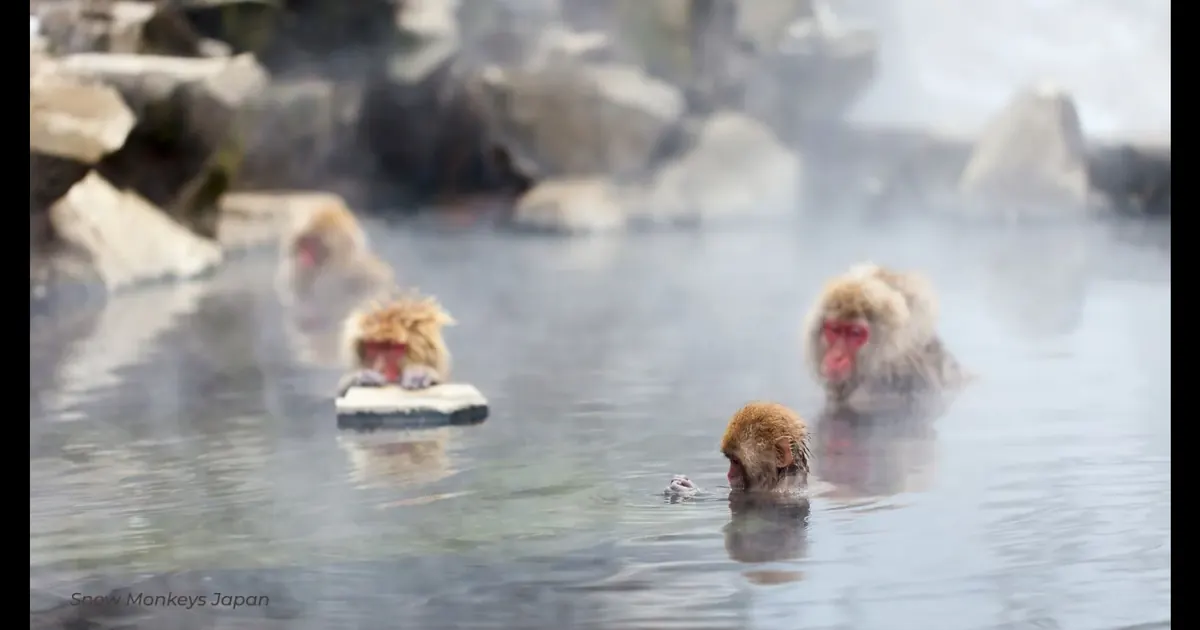
In Shibu Onsen the public baths are locked. Nine small wooden bathhouses sit along a narrow stone-paved lane above the Yokoyu River, and the only way in is with a key your innkeeper hands you at check-in. After dinner the lane fills with the clack of wooden geta as guests in cotton yukata go from door to door, stamping a cloth towel at each one, chasing the old promise that nine soaks wash away nine kinds of suffering.
Locals have kept the ritual going for generations in a town about 2.5 km downstream of the Jigokudani snow monkeys. That makes Shibu the most atmospheric place to spend the night before a morning with the macaques.
This guide covers each of the nine baths and what it’s said to cure, how the key-and-stamp system works, what day visitors can (and can’t) do, what is and isn’t known about Kanaguya and Spirited Away, which ryokan to book, and how to fit it all around the monkeys in one or two nights.
Quick answer (verified October 2026)
- The nine-bath tour (kyu-to meguri) is for overnight guests only. Stay at a Shibu inn and you borrow a key; bathing is free, 6:00–22:00 (except during cleaning).
- Day visitors get one bath: No. 9 Oyu, ¥800 adult / ¥500 child, 10:00–17:00, but only from 13:00 on Mondays, Wednesdays and Fridays (daily from 10:00 at Golden Week, Obon and New Year). Buy a ticket first; it closes on some days at short notice.
- Prayer towel for the stamps: ¥350, sold at the inns (as of October 2026; check before you travel).
- Kanaguya was founded as an inn in 1758; its four-storey wooden Saigetsuro wing dates from 1936 and has been a Registered Tangible Cultural Property since 2003. Studio Ghibli has never named it as the Spirited Away model.
- Our plan: one night in Shibu, the nine baths that evening, and the monkeys at opening time the next morning.
Check Availability
Where is Shibu Onsen, and how does it relate to Yudanaka and Jigokudani?
Shibu is the middle rung of a ladder up the Yokoyu River valley: Yudanaka (with the train station) sits below, Shibu in the middle, and Kanbayashi and Jigokudani (the monkeys) above.
All four belong to Yamanouchi town in northern Nagano Prefecture, at the foot of the Shiga Kogen plateau, and to the Yudanaka-Shibu Onsenkyo, a cluster of nine hot-spring villages. You’ll see these names on every map and booking site:
| Village | What it is | Why you’d stay |
|---|---|---|
| Yudanaka Onsen | Nagaden railhead; spread out, more modern | Train access; big historic inns like Yorozuya |
| Shibu Onsen | Compact stone-paved old town with the nine public baths | Atmosphere, the bath crawl, Kanaguya |
| Kanbayashi Onsen | Small forest village at the start of the monkey trail | Walking straight onto the trail at opening time |
| Jigokudani Onsen | The gorge itself; the monkey park and one lone inn, Korakukan | Not a place to sleep at present: Korakukan currently offers day bathing only |
From Kanbayashi the official trail to the park is about 2 km, roughly 30 minutes on foot. It’s unpaved, with stairs and slopes, and not suitable for wheelchairs or strollers. For the full walk, see our Jigokudani Snow Monkey Park guide.
How old is Shibu Onsen?
Legend says the travelling monk Gyoki found the springs around 1,300 years ago. Wounded samurai are said to have recovered here in the 16th century, and in the Edo period Shibu was a stop on the road between Zenko-ji and Kusatsu.
- Gyoki’s spring (8th century, legend): The town’s own bath guide says Gyoki found the spring that became bath No. 1 while washing his begging bowl (hachi) in it, and that “hachi-yu” drifted into “Hatsuyu”. Oyu (No. 9) is also called a spring he found. Treat both as founding stories, not documented history.
- Takeda Shingen’s “hidden spring”: The ryokan association calls Shibu one of the warlord’s secret springs, where soldiers wounded at the 1561 Battle of Kawanakajima are said to have convalesced.
- A post town on the Kusatsu road: Regional histories say Shibu was a day’s journey from Kusatsu and was prized as a gentler “finishing bath” after Kusatsu’s harsh acidic water.
- Famous fans: The haiku poet Kobayashi Issa, the ukiyo-e master Katsushika Hokusai and the scholar Sakuma Shozan are all said to have known the area. Issa’s documented link is mainly to neighbouring Yudanaka.
- Today’s streetscape: Most of the wooden inns lining the lane went up in the Taisho and early Showa eras (1910s–1930s) and were extended again and again. That’s why Shibu looks like a film set.
What are the nine baths of Shibu Onsen?
They are nine small, gender-separated indoor bathhouses (soto-yu), numbered 1 to 9. Each is fed entirely by natural spring water, each is traditionally said to help a different complaint, and all of them run very hot.
The names and water notes below follow the Shibu Onsen Ryokan Association. The “said benefit” is tradition, not medical advice.
| # | Name | Kanji | Said to help | Water notes |
|---|---|---|---|---|
| 1 | Hatsuyu (“First Bath”) | 初湯 | Stomach and intestines | Weakly acidic; the bowl-washing legend |
| 2 | Sasa no Yu (“Bamboo-Grass Bath”) | 笹の湯 | Eczema; recovery after illness | Weakly acidic; once rose in a bamboo-grass thicket |
| 3 | Wata no Yu (“Cotton Bath”) | 綿の湯 | Cuts and skin complaints | Weakly acidic; white mineral flakes like cotton |
| 4 | Take no Yu (“Bamboo Bath”) | 竹の湯 | Gout | Weakly alkaline; named for the first water piped from Jigokudani |
| 5 | Matsu no Yu (“Pine Bath”) | 松の湯 | Neuralgia; recovery after illness | Weakly alkaline; very hot source (86.5°C) |
| 6 | Mearai no Yu (“Eye-Washing Bath”) | 目洗いの湯 | Eye complaints; nicknamed the “beauty bath” | Neutral; about 50°C at source |
| 7 | Nanakuri no Yu (“Seven-Times Bath”) | 七操の湯 | Injuries; said to heal in seven soaks | Neutral; black mineral flakes |
| 8 | Shinmei-daki no Yu (“Shinmei Falls Bath”) | 神明滝の湯 | Women’s health; the “fertility bath” | Neutral; rises from Mount Shinmei behind town |
| 9 | Oyu (“Great Bath”) | 大湯 | Neuralgia and rheumatism; “cures all ills” | Neutral; brown, iron-rich; steam room; the only one open to day visitors |
Fact box: the water Source temperatures across the nine springs range from about 50°C to 86.5°C, and every bath is free-flowing (kake-nagashi), straight from the source. Expect to add cold water before you can get in.
You may see bath No. 6 called “Mejiyu” and No. 8 “Kami no Yu” on older English pages. The official names are Mearai no Yu and Shinmei-daki no Yu.
What is kyu-to meguri, and how does the prayer towel work?
Kyu-to meguri (九湯めぐり, “nine-bath tour”) means bathing in all nine baths, stamping a prayer towel at each one, then climbing to the hilltop hall of Shibu Takayakushi for a final seal so that your wish comes true.
The wordplay is the point. Ku (九, nine) sounds like ku (苦, suffering), so nine baths are said to wash away kurō, toil and hardship. The association adds warding off bad luck, safe childbirth and long life for good measure.
- The towel (kigan tenugui): Sold at every Shibu inn for ¥350, according to GO NAGANO, Nagano’s official tourism site (as of October 2026; check before you travel). Some recent blog reports mention ¥500, so carry a little extra.
- The stamps: Each bathhouse has a stamp at its entrance. Ink the towel on your way out.
- The finale: Shibu Takayakushi (渋高薬師), a small hall to the Medicine Buddha at the top of a steep stone stairway, about two minutes on foot from the tourist information office. The traditional order is to finish at Oyu, then climb.
Fact box: allow time The baths are close together but the doors are easy to miss. Allow 1.5–2.5 hours for all nine with short soaks, or split them between the evening and the next morning. Grab the association’s digital map from your inn.
Can day visitors use the Shibu Onsen public baths?
Only one of them. Day visitors can use bath No. 9, Oyu, for ¥800 (adults) or ¥500 (children). Baths 1–8 are strictly for overnight guests at Shibu inns.
Most English guides get the schedule wrong. The ryokan association’s day-use page (updated June 2026) gives 10:00–17:00. GO NAGANO and japan-guide both add that on Mondays, Wednesdays and Fridays Oyu opens to day visitors only from 13:00, and that it’s open daily from 10:00 during Golden Week, Obon and New Year. Plan around the stricter version.
How it works:
- Buy a ticket at the Shibu Onsen tourist information office or at one of the inns near Oyu (the association lists Kanaguya, Katei, Yumoto Ryokan, Matsuya, Hishiya and Ikariya). Bring cash.
- Get the door unlocked. Show your ticket at one of the listed unlocking points: Komatsuya shop or one of several nearby inns. Staff aren’t there at all times, so you may have to wait or try another one.
- Bathe, then stamp the towel on the way out if you bought one.
Oyu has irregular closure days. The association posted three single-day closures between July and September 2026 alone, so check the news page at shibuonsen.net on the morning you go.
For day-trippers: A day visit gives you the lanes, the architecture and a hot soak in Oyu, but you miss the nine-bath evening. If you can spare one night, stay.
Other day-bathing options nearby
- Kaede no Yu (Yudanaka Station): A modern day-use bathhouse right beside the station, with indoor and outdoor baths. ¥500 adult / ¥300 elementary-school child, open 10:00–21:00 (last entry 20:30), closed on the first Tuesday of the month (the next day if that’s a holiday). There’s a free footbath outside. Handy while you wait for a train.
- Yorozuya (Yudanaka): Its famous Momoyama bath is not open to day bathers; the inn’s site says its hot-spring baths are for staying guests only. Non-guests may photograph it daily from 9:45 to 10:00.
- Jigokudani Onsen Korakukan: The lone inn below the monkey park, where the macaques first bathed (the story is in why snow monkeys bathe). Japan’s secluded-onsen association lists day bathing from 12:00 to 15:00, ¥1,200 for adults and ¥600 for children, in season from early April to late September, with no overnight plans currently bookable. Travellers have reported finding it closed, so phone before you plan around it (0269-33-4376).
How do you use the Shibu public baths properly?
Wash at your inn first, bring your own towels, lock the door, cool the water only as much as you need, and keep your voice down. These are residents’ baths you’re borrowing.
- No showers, no soap. Each bathhouse is a changing room and a tub. There’s no shampoo or body wash and no lockers, so leave valuables at the inn.
- The water is scalding. The association warns the water comes straight from the source and is extremely hot. Use the cold tap to cool your corner, turn it off again when you’re done, and stir. Even then, many visitors manage only a quick dip. Short soaks, lots of breaks.
- Shoes off. Leave geta outside; no footwear in the changing room.
- Lock the door. The doors are locked to keep non-guests out, so lock up behind you when you go in and when you leave.
- They’re tiny. Most tubs fit three or four people. If one is full, go to another and come back.
- Gender-separated, no swimsuits. Each bathhouse has separate men’s and women’s sides.
- Yukata and geta, but watch your footing. It’s half the fun, but the stone lanes and steps get icy in winter.
- Tattoos: We found no official tattoo policy for the nine public baths, and several Shibu inns say tattoos may not be permitted in their shared baths. If you have visible tattoos, book an inn with private baths and ask the inn directly before you go out.
For the general routine at any bath, from washing to towels, see the etiquette steps in our guide to the best onsen near Tokyo.
Is Kanaguya really the Spirited Away bathhouse?
Nobody can say so. Studio Ghibli has never named Kanaguya, or any single building, as the model for the film’s bathhouse. The resemblance at night is real; the “inspiration” story is fan lore.
The documented history is just as good:
- From blacksmiths to innkeepers: The name means “metal-fittings shop”. The family were smiths until a landslide in 1754 struck the property and hot water began to flow during the rebuilding; by 1758 they had given up smithing to run the inn full-time.
- Saigetsuro, 1936: The four-storey wooden wing was begun in 1933 and finished in 1936 (early Showa, not Taisho as many sites say), built by the shrine carpenter Mita Seisuke of Obuse around 13 full-height pillars about 15 m long.
- Protected since 2003: Saigetsuro and the inn’s Grand Hall were registered as national Tangible Cultural Properties on 1 July 2003.
- Guests-only interior: Kanaguya runs a cultural-property tour every day at 17:30 for staying guests. Non-guests can only admire the outside.
- Baths: Three large shared baths and five private baths, fed by the inn’s own four springs.
- Lit up at night: The facade is illuminated every evening. Everyone comes for this shot; take it from the lane just after dark.
Heads-up for autumn 2026: Kanaguya’s website notes that stone-paving works in the Shibu lanes restrict vehicle traffic from 29 June to early December 2026. Check with your inn how drop-offs and pickups are working.
Which ryokan should you book in Shibu, Yudanaka or Kanbayashi?
For the classic stay, sleep in Shibu itself so the nine baths are steps from your door. Our where to stay near the Snow Monkey Park guide compares Shibu with Kanbayashi, Yudanaka and Nagano. Pick Kanaguya for the building, Kokuya for private and in-room baths, or Ichinoyu Katei for a central, traditional stay. Choose Kanbayashi only if being first on the monkey trail matters more to you than the old town.
Ryokan rates swing hugely by season, day of the week and room, so we don’t quote them. Check live prices. Nagano Prefecture now adds an accommodation tax of ¥200 per person per night (not charged when the room-only rate before tax is under ¥6,000), on top of the usual bath tax.
| Ryokan | Area | Why book it | Private baths | Tattoos |
|---|---|---|---|---|
| Kanaguya | Shibu | 1936 wooden Saigetsuro wing; guest tour at 17:30 | 5 private baths | No published policy; use the private baths |
| Kokuya | Shibu | 19 rooms, 10 of them with their own open-air bath; English-speaking staff | 2 free private baths for all guests | Not published; ask |
| Ichinoyu Katei | Shibu | All-tatami, central, free station shuttle | Reservable private bath | May not be permitted in shared baths (official) |
| Yorozuya | Yudanaka | Momoyama bath, a 2003 registered cultural property | Paid private and in-room baths | Palm-size or smaller if covered; otherwise private baths only |
| Shoraiso | Yudanaka | 5-room luxury wing rebuilt after a fire, opened 1 March 2024; uses Yorozuya’s baths | Open-air bath in every room | As Yorozuya |
| Kanbayashi Hotel Senjukaku | Kanbayashi | About 3 minutes’ walk from the trail entrance; indoor pool; English-speaking | Private indoor and outdoor baths | Not published; ask |
Who should book what
- First-timers who want “the” Shibu night: Kanaguya. Ask for a Saigetsuro room and join the 17:30 tour.
- Couples, families or tattooed travellers: Kokuya, for the free private baths and rooms with their own open-air tub.
- Most central for the bath crawl: Ichinoyu Katei.
- Monkeys at opening time with no bus: Senjukaku.
- Splurge: Shoraiso, with the Momoyama bath next door.
For more options across the valley, browse all stays in Shibu Onsen, Yudanaka Onsen or Kanbayashi Onsen.
Booking tips: Most inns check in from 15:00 and out by 10:00. Kaiseki dinners are set menus made with fish stock, so ask about vegetarian or other diets before you book (Ichinoyu Katei, for example, needs dinner reservations three days ahead). Some inns won’t serve dinner if you arrive late. Book winter weekends and Lunar New Year (late January–February) months ahead.
What is there to do in Shibu besides bathing?
Walk the lanes in yukata after dark, climb to Takayakushi, taste local sake and craft beer, and, if you’re here in August, catch the nightly street festival.
- The night walk: Shibu is at its best after dinner, lit by lanterns and Kanaguya’s glowing facade.
- Temples: A short “blessings walk” links Onsenji, a Zen temple whose origins go back to the 14th century, with Takayakushi.
- Tamamura Honten: The brewery behind Engi sake (since 1805) and Shiga Kogen Beer has a shop a short, steep walk from the lanes; wear shoes, not geta.
- Retro games: Old-style shooting galleries and table-tennis rooms are part of the evening scene, especially in summer.
- Summer festival: For most of the first half of August, Shibu’s lanes close to traffic in the evenings and the inns set up stalls. Dates change each year, so check shibuonsen.net in July.
- Monkeys in town: They occasionally wander down into the streets. Don’t feed them or leave food on balconies.
How do you get to Shibu Onsen from Tokyo?
Take the Hokuriku Shinkansen to Nagano (from about 80 minutes), the Nagaden train to Yudanaka (about 45 minutes by limited express), then a 5-minute bus, taxi or inn pickup to Shibu. Allow about three hours from Tokyo Station. If you’d like to see Zenko-ji on the way, our Nagano day trip from Tokyo has timed itineraries.
| Leg | Time | Fare (adult, one way) |
|---|---|---|
| Tokyo → Nagano, Hokuriku Shinkansen | From about 80 min | ¥8,450 reserved (¥8,250 as an e-ticket); ¥7,920 non-reserved |
| Nagano → Yudanaka, Nagaden limited express | About 45 min | ¥1,760 (¥1,660 fare + ¥100 limited-express ticket) |
| Yudanaka → Shibu Onsen | Bus about 5 min; taxi about 5 min; walk about 30 min | Bus about ¥250; taxi around ¥1,200 |
Fares as of October 2026; check before you travel. Nagaden is a private railway, so JR passes don’t cover it. Most Shibu inns offer free pickup from Yudanaka if you phone ahead. Full route details, passes and timetables are in how to get from Tokyo to the snow monkey park.
Getting from Shibu to the monkeys
Local Nagaden buses from Yudanaka stop at Shibu Onsen on their way to the Snow Monkey Park stop in Kanbayashi (¥390 from Yudanaka, less from Shibu; check the fare chart on board). From there it’s about 1.6–2 km, 30–40 minutes on foot to the park entrance; allow longer on snow. Some inns run their own shuttles.
The direct Nagano express bus (¥3,000 in winter / ¥2,000 the rest of the year, one way, adults) runs to the Snow Monkey Park stop, not into Shibu’s lanes, so it suits people staying in Kanbayashi.
Drivers: The free Kanbayashi car park is the park’s main one. The ¥500 Jigokudani car park, up a narrow forest road from Shibu, is closed in winter (roughly December to March), and the park asks winter visitors to use public transport where possible.
What does the park cost once you’re there?
Adults pay ¥800 and children ¥400 until 30 November 2026. From 1 December 2026 the park charges ¥880 for an online (Webket) ticket or ¥1,000 at the gate (children ¥440 / ¥500), according to the park’s 20 September 2026 notice. Check the official site before you go.
Hours are 8:30–17:00 from April to October and 9:00–16:00 from November to March. From December to April, holders of web tickets get priority entry, and on crowded days you may be refused without one, so book your date online (sales open three months ahead). Details: Jigokudani tickets, fees and hours.
What’s the best Shibu Onsen itinerary?
One night is enough for the nine baths and the monkeys. Two nights let you add Shiga Kogen, Obuse or Zenko-ji without rushing.
One night
- Day 1: Leave Tokyo mid-morning and reach Yudanaka by early afternoon. Check in from 15:00, soak at your inn, then do baths 1–4 before dinner (or the Kanaguya tour at 17:30 if you’re staying there). Dinner around 18:00. After dark: baths 5–9, finish at Oyu, climb to Takayakushi, then stroll past the lit-up Kanaguya.
- Day 2: Early breakfast, check out, leave your bags at the inn, and take the bus to Kanbayashi to reach the park near opening time, when crowds are thinnest. Back to Shibu for your bags, then Yudanaka → Nagano → Tokyo by evening.
Coming from further afield? Our 10-day Japan itinerary through Shibu spends this one night here, then heads west to Kanazawa and Kyoto instead of back to Tokyo.
Two nights
- Day 2: Monkeys in the morning, then ski or snowshoe Shiga Kogen in winter, or hike its ponds in the green season. Alternatively, take the Nagaden to Obuse for Hokusai and chestnut sweets. Second evening: repeat your favourite baths.
- Day 3: Stop at Zenko-ji in Nagano on the way back. See our snow monkey and Zenko-ji tours if you’d rather have a driver for that day.
Winter or green season? Winter (December–February) gives you the best odds of the classic snow-and-steam scene, steaming bathhouses and monkeys in the pool, but also icy lanes and peak crowds. The green season is quieter, with easier walking and the August festival, but the monkeys usually bathe less in warm weather. Month by month: best time to see the snow monkeys.
Short on time? Tours
Disclosure: Some links on this page are GetYourGuide and hotel-booking affiliate links. If you book through them we may earn a commission at no extra cost to you.
Day tours often include time in Shibu’s lanes after the monkeys. They’re a good option if you can’t stay the night, but be clear about what you’re getting: a short visit, not the nine baths.
- Starting in Nagano: the Nagano: Snow Monkey Park, Soba Lunch, and Shibu Onsen Tour (from $127 per person, 5/5 from 17 reviews, a small sample) collects you at Nagano, Yudanaka or Iiyama station and includes park entry, a soba lunch in Shibu and entry to one of the nine public baths with a towel on loan. Take the Shinkansen from Tokyo first. Read our breakdown.
- Door to door from Tokyo: the Tokyo: Private Snow Monkey Park & Nagano Scenic Day Trip (from $102 per person, 4.9/5 from more than 220+ reviews) picks you up at your hotel and allows two hours at the park, with Shibu Onsen as an optional stop on the way back if time allows.
Compare the rest in which snow monkey tour from Tokyo is right for you.
Frequently asked questions
Can you visit Shibu Onsen as a day trip?
Yes. You can walk the lanes, see Kanaguya from outside and bathe in No. 9 Oyu (¥800). The other eight baths need an overnight stay.
What are Oyu’s day-visitor hours?
10:00–17:00, but only from 13:00 on Mondays, Wednesdays and Fridays (daily from 10:00 at Golden Week, Obon and New Year). It closes on some days at short notice.
How much does it cost to use the nine baths?
Nothing extra if you stay at a Shibu inn. Your ryokan lends you a key and bathing is free.
What are the hours for overnight guests?
6:00–22:00, except during cleaning.
What is kyu-to meguri?
The nine-bath tour: bathe in all nine public baths, stamp a prayer towel at each, then get the final seal at Shibu Takayakushi.
How much is the prayer towel?
¥350 at the inns, according to GO NAGANO (as of October 2026); some recent reports say ¥500.
Why nine baths?
“Nine” (ku) sounds like “suffering” (ku) in Japanese, so nine baths are said to wash away hardship.
Is Kanaguya the Spirited Away bathhouse?
It’s widely compared to it, but Studio Ghibli has never confirmed Kanaguya, or any single building, as a model.
Can non-guests go inside Kanaguya?
No. The interior and the 17:30 cultural-property tour are for staying guests only.
Are tattoos allowed in Shibu’s public baths?
There’s no published policy for the nine baths, and several inns restrict tattoos in shared baths. Book an inn with private baths and ask.
How far is Shibu Onsen from the snow monkeys?
Jigokudani is about 2.5 km upstream. Most people take a short bus to Kanbayashi and walk about 2 km (around 30–40 minutes) to the park.
How do I get from Yudanaka Station to Shibu Onsen?
Bus (about 5 minutes, about ¥250), taxi (about 5 minutes, around ¥1,200), on foot (about 30 minutes) or your inn’s free pickup.
Is Shibu or Yudanaka better to stay in?
Shibu for atmosphere and the nine baths; Yudanaka for train convenience and big historic inns such as Yorozuya.
Can I bathe at Korakukan without staying?
Yes, in season. Japan’s secluded-onsen association lists day bathing from 12:00 to 15:00 (¥1,200 adults, ¥600 children) from early April to late September, and no overnight plans at present. Travellers have found it closed on some days, so call 0269-33-4376 first.
Practical info
Verified October 2026
- Shibu Onsen Ryokan Association / tourist info: 0269-33-2921 · shibuonsen.net
- Nine public baths (overnight guests): free with your inn’s key, 6:00–22:00
- Oyu day use: ¥800 adult / ¥500 child; 10:00–17:00 (from 13:00 Mon/Wed/Fri); ticket from the tourist information office or nearby inns; cash; occasional closures
- Prayer towel: ¥350 at the inns (as of October 2026; check before you travel)
- Kaede no Yu (Yudanaka Station): ¥500 / ¥300; 10:00–21:00 (last entry 20:30); closed first Tuesday; free footbath
- Kanaguya: 0269-33-3131; guest-only tour daily at 17:30; facade lit nightly
- Korakukan (Jigokudani): 0269-33-4376; day bath ¥1,200 adult / ¥600 child, 12:00–15:00, early April to late September; no overnight plans at present
- Roadworks: stone-paving works restrict vehicles in the Shibu lanes until early December 2026
- Monkey park: ¥800 until 30 Nov 2026; from 1 Dec ¥880 online / ¥1,000 at the gate
- Nagano accommodation tax: ¥200 per person per night (from 1 June 2026)
Sources
- Day-use onsen (Oyu) — Shibu Onsen Ryokan Association
- Nine public baths — Shibu Onsen Ryokan Association
- Bathing manners — Shibu Onsen Ryokan Association
- News and closure notices — Shibu Onsen Ryokan Association
- Shibu Onsen nine-bath tour — GO NAGANO
- Shibu Onsen — japan-guide.com
- Kanaguya: history and architecture
- Kanaguya: Saigetsuro construction
- Kanaguya official site (notices)
- Kanaguya Saigetsuro — Agency for Cultural Affairs heritage database
- Kanaguya profile — tabi-mag
- Shibu-Onsen Kokuya — GO NAGANO
- Ichinoyu Katei (English)
- Yorozuya (English)
- Shoraiso (English)
- Kanbayashi Hotel Senjukaku — Snow Monkey Resorts
- Jigokudani Onsen Korakukan — Japan’s secluded-onsen association
- Jigokudani Onsen Korakukan — GO NAGANO
- Kaede no Yu — Jorudan
- Nagaden local bus timetable — Snow Monkey Resorts
See the Snow Monkeys — and Be Back in Tokyo by Evening
A private vehicle both ways, a 30-minute forest walk in, and unhurried time at the hot spring. Rated 4.9/5 by 225 guests. Free cancellation up to 24 hours before.
Check Availability & Book