Snow in Japan: When and Where to See It (Including the Easiest Snow from Tokyo)
Where and when it snows in Japan, with JMA data by city, 2027 snow festival dates, the mild 2026–27 outlook and the easiest real snow from Tokyo.
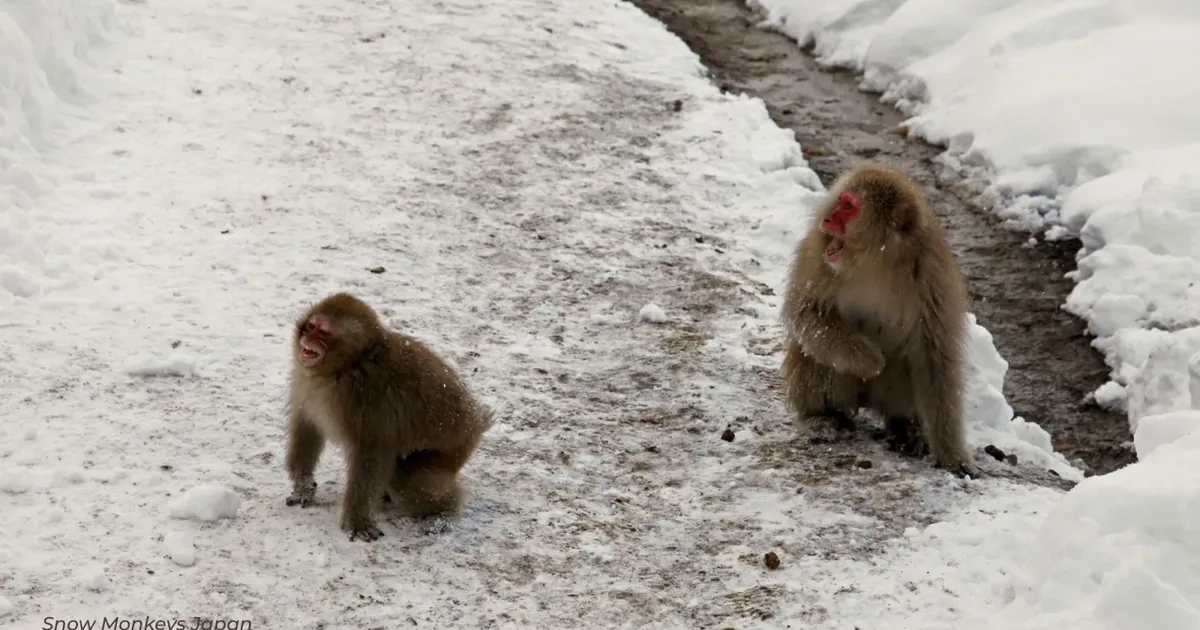
Picture two Januaries. In one, a snowflake lands on your sleeve in Shibuya and is gone before you can photograph it. In the other, you’re walking a gas-lit street in Ginzan Onsen with snow banked chest-high, or watching a wild macaque doze in a steaming pool while snow settles on its head. Both count as “snow in Japan”. What separates them is a train ride of a few hours.
Japan has some of the snowiest cities on Earth. Aomori gets around 5.7 metres of snow in an average winter, and about half the country’s land is legally designated heavy-snow country. Tokyo, meanwhile, averages 8 cm a year. If you want to stand in real snow, you need to leave the capital, and you need to know where to go.
Below, the Japan Meteorological Agency’s (JMA) official 1991–2020 climate normals show where snow settles, when it peaks and how reliable it is. You also get the confirmed 2027 festival dates, what the mild El Niño forecast for 2026–27 means for your trip, and the easiest real snow from Tokyo, the snow monkeys included.
Quick answer: snow in Japan (checked October 2026)
- Best months: Lying snow is most reliable from mid-January to February. Most snow-country cities get their heaviest snowfall in January and their deepest snow on the ground in February (JMA 1991–2020 normals).
- Snowiest big city: Aomori averages 567 cm of snowfall a year and about 1 m of maximum depth. Sapporo averages 479 cm.
- Tokyo: about 8 cm of snowfall and 8.5 days with snow a year. Settled snow is rare; the record is 46 cm on 8 February 1883 (JMA).
- Kyoto and Osaka: 15 cm and 1 cm a year. Snow there is a lucky bonus.
- 2026–27 outlook: JMA’s cold-season forecast of 18 September 2026 and its three-month forecast of 20 October 2026 both expect El Niño to persist, a warmer-than-normal winter and below-normal snowfall on the Sea of Japan side of eastern and western Japan.
- Easiest real snow from Tokyo: GALA Yuzawa (about 80 minutes by Shinkansen; South Area closed for 2026–27) or the Jigokudani snow monkeys in Nagano (about 3–3.5 hours each way), which pair with Zenko-ji on a Nagano day trip.
Check Availability
Why does Japan get so much snow?
Cold Siberian air crosses the relatively warm Sea of Japan, picks up moisture and drops it as snow on the mountains facing that sea. Tokyo sits on the dry, sunny side of those mountains.
It works like this:
- The winter monsoon. From December to February, high pressure over Siberia and low pressure to the north-east of Japan set up the classic “high in the west, low in the east” pattern (seiatsu-tōtei). Bitterly cold north-westerly winds blow towards Japan.
- The Sea of Japan as a moisture source. The warm Tsushima Current keeps the sea mild. The frigid air soaks up heat and moisture as it crosses, building bands of snow cloud. It’s the same sea-effect process as North America’s lake-effect snow, on a far bigger scale.
- The mountain wall. Those clouds hit Honshu’s mountainous spine and unload on the windward side: Niigata, Toyama, northern Nagano, Gifu’s Hida highlands and inland Tohoku. By the time the wind reaches the Pacific coast it is dry. That’s why Tokyo’s winters are clear and blue while Yuzawa, just over an hour north by train, sits under metres of snow.
- The JPCZ. The Japan Sea Polar Air Mass Convergence Zone is a band where air splits around the Korean mountains and rejoins over the sea. It can park an intense snow band over one stretch of coast for days, which is behind the sudden dumps that strand cars on Hokuriku expressways.
- Tokyo’s exception. Tokyo’s rare big snows come from lows tracking along the south coast (nangan teikiatsu). If one passes at just the right distance while cold air is in place, the capital gets a proper snowfall, as in February 2014 and January 2018.
Records
- 11.82 m: the deepest snow ever measured in Japan, on the summit of Mount Ibuki (Shiga–Gifu border) on 14 February 1927. The observatory has since closed.
- 566 cm: Sukayu Onsen, Aomori, 26 February 2013. The deepest snow at a JMA station still in operation.
- 183 cm: Aomori City’s snow depth on 1 February 2026, reported as the deepest in about 40 years.
- 46 cm: Tokyo’s all-time deepest snow, 8 February 1883. The deepest in modern times was 27 cm on 15 February 2014 (JMA).
The Japanese word for snow country, yukiguni, was made famous by Yasunari Kawabata’s novel Snow Country, set in the hot-spring town of Echigo-Yuzawa. The legal term is gōsetsu chitai (heavy-snow area). Under the national designation, roughly half of Japan’s land area falls into it.
Which Japanese cities get the most snow?
Aomori, Asahikawa and Sapporo lead the big cities; mountain towns in northern Nagano get even more. Kyoto, Osaka and the south get only a few centimetres a year.
Two terms to know: annual snowfall is the total of all new snow over the season, not what’s on the ground. Average max depth is the average of each year’s deepest snow cover. Snow settles, melts and gets ploughed, so depth is always far lower than snowfall.
| City / station | Annual snowfall (cm) | Avg annual max depth (cm) | First snow (normal) | Last snow (normal) |
|---|---|---|---|---|
| Sukayu Onsen, Aomori (~900 m) | about 1,700 | — (record 566) | — | — |
| Iiyama, Nagano (nearest station to Nozawa Onsen) | 821 | — | — | — |
| Hakuba, Nagano | 655 | — | — | — |
| Aomori | 567 | 101 | 8 Nov | 15 Apr |
| Asahikawa, Hokkaido | 557 | 89 | 19 Oct | 1 May |
| Sapporo, Hokkaido | 479 | 97 | 28 Oct | 21 Apr |
| Takayama, Gifu | 305 | — | — | — |
| Toyama | 253 | 51 | 3 Dec | 5 Apr |
| Nagano city | 163 | 33 | 18 Nov | 8 Apr |
| Kanazawa | 157 | 32 | 24 Nov | 7 Apr |
| Niigata | 139 | 32 | 23 Nov | 6 Apr |
| Kyoto | 15 | 7 | 11 Dec | 23 Mar |
| Tokyo | 8 | 6 | 3 Jan | 9 Mar |
| Hiroshima | 8 | — | — | — |
| Fukuoka | 2 | — | 16 Dec | 7 Mar |
| Osaka | 1 | — | 26 Dec | 8 Mar |
Source: JMA climate normals, 1991–2020. Aomori, Sapporo, Nagano and Tokyo figures checked on JMA’s station pages on 2 October 2026; others from JMA normals as reproduced in JMA-sourced climate tables. “—” means no verified figure.
How to read it:
- The gap is enormous. Aomori gets about 70 times Tokyo’s snowfall. Northern Japan has a different kind of winter from Tokyo’s.
- Nagano city is not the snowy bit of Nagano. The city itself averages 163 cm, with January (63 cm) its snowiest month. The deep snow is up in the mountains to the north: Iiyama, Nozawa, Shiga Kogen and the valley around the snow monkeys.
- Tokyo’s first snow comes later than Osaka’s (3 January vs 26 December). A “first snow” only needs flakes or sleet to be seen falling; nothing has to settle.
If lying snow is the point of your trip, aim for the top half of this table.
When is snow season in Japan, month by month?
Snow arrives in Hokkaido in late October, reaches most of snow country by late November or December, and is most dependable from mid-January to February. High alpine snow lingers into June.
| Month | What the snow is doing | Best bets |
|---|---|---|
| Oct | First flakes in Hokkaido (Asahikawa normal 19 Oct, Sapporo 28 Oct). Nothing lying in towns. | Autumn colour under snow-capped peaks |
| Nov | Snow starts to settle in Hokkaido; first snow in Aomori (8 Nov) and Nagano (18 Nov). The Tateyama Kurobe Alpine Route closes for winter (2026 season ends 30 Nov). | Early-season Hokkaido; too early for snow scenery elsewhere |
| Dec | Snow cover builds on the Sea of Japan side; ski resorts open from mid- to late December, snow permitting. Early December is the most common disappointment window. | Hokkaido; higher Niigata and Nagano resorts from late December |
| Jan | Peak snowfall in most snow-country cities (Aomori 195 cm, Sapporo 137 cm, Nagano 63 cm). Nozawa Fire Festival (15 Jan). Drift ice usually reaches Abashiri mid- to late January. | Powder skiing, snow monkeys, Ginzan Onsen, Shirakawa-go, Zao snow monsters |
| Feb | Deepest snow on the ground (Aomori 97 cm, Sapporo 95 cm) and the main festival season. Also Tokyo’s snowiest month, though that means 3.5 snow days. | Sapporo, Otaru, Asahikawa, Hirosaki and Yokote festivals; drift ice; snow monsters |
| Mar | Still deep in the north and the mountains; spring skiing. Tokyo’s last-snow normal is 9 March. | Spring skiing in Hakuba and Niseko; drift ice into March |
| Apr | Low-level snow melts. The Tateyama Kurobe Alpine Route reopens with its towering snow walls (15 April in 2026). | Snow walls; high-altitude spring skiing |
| May–Jun | The snow walls slowly shrink (the 2026 Yuki-no-Otani Walk ran until 25 June). | Tateyama |
For the snow monkeys month by month, from first snow to the spring babies, see the best time to see the snow monkeys.
Will winter 2026–27 be a good snow year?
Probably a thinner one than usual on the Sea of Japan side. JMA’s cold-season forecast of 18 September 2026 leans mild, and its three-month forecast of 20 October 2026 (November to January) kept that view, so pick high or northern destinations and book flexibly.
What JMA says for December 2026 to February 2027:
- El Niño continues. JMA’s El Niño outlook of 9 September 2026 puts the chance of El Niño lasting through winter at 100%, with a peak possibly comparable to the strong 1997 event. El Niño winters in Japan tend to be mild.
- Temperature: above normal in eastern and western Japan (including Tokyo, Nagano and Niigata), and normal or above in northern Japan.
- Sea of Japan-side snowfall: below normal in eastern and western Japan, and normal or below in northern Japan, Hokkaido included.
- The twist: forecasters at the Japan Weather Association (tenki.jp) note that lows are expected to track along the south coast more often, so snow is possible even on the normally snow-light Pacific side, Tokyo included. A mild season on average can still bring sharp cold snaps and sudden heavy falls.
What it means for you:
- Hokkaido, high Nagano resorts and inland Tohoku are the safest bets.
- Lower, marginal places (low-base resorts, Hokuriku cities, Kyoto) are most at risk of a thin or late season.
- Book refundable rooms where you can, and check the snow again 1–2 weeks before you go. JMA updates its three-month forecast every month through the winter.
Last winter was the opposite. In 2025–26 a late-January cold wave buried the north: Aomori’s snow depth reached 183 cm on 1 February 2026, and the Self-Defense Forces were called in to help. Swings like that between consecutive winters are why no one can promise snow on fixed dates.
Where should you go to see snow in Japan?
For the most reliable, deepest snow, go to Hokkaido or northern Tohoku in February. For the best snow within easy reach of Tokyo, go to northern Nagano or Niigata’s Yuzawa area.
Hokkaido: deepest, driest, most reliable
When: mid-December to mid-March; February for festivals. From Tokyo: fly Haneda to New Chitose (about 1.5 hours in the air).
- Sapporo: almost 5 m of snowfall a year and nearly 1 m on the ground by February. The Snow Festival fills Odori Park with giant sculptures.
- Otaru: a canal town about 40 minutes from Sapporo by train, known for its snow-lantern festival.
- Asahikawa: colder than Sapporo, with its own winter festival.
- Niseko: the “JaPow” capital. Superb snow, but peak-season prices and crowds.
- Abashiri and Shiretoko: drift ice on the Sea of Okhotsk. It usually reaches the coast in mid- to late January, and japan-guide puts the best odds in the second half of February. The Aurora icebreaker cruises ran from 20 January to 31 March in 2026; 2027 dates aren’t out yet, and the cruise is sold by its operator rather than on GetYourGuide or Viator. The ice moves with the wind, so a cruise is never a guaranteed sighting.
Hokkaido festival dates, 2027 (checked October 2026)
- Sapporo Snow Festival: 4–11 February 2027 at Odori Park, Susukino and Tsudome. Free entry.
- Otaru Snow Light Path: 6–13 February 2027.
- Asahikawa Winter Festival (68th): 6–11 February 2027.
- Abashiri drift-ice cruises: 2027 season not yet announced (2026: 20 Jan–31 Mar).
Tohoku: snow monsters, lantern castles and the snowiest city
When: late January to February. From Tokyo: Tohoku Shinkansen to Shin-Aomori (about 3 hours), Yamagata Shinkansen to Yamagata or Oishida, or Akita Shinkansen to Kakunodate and Akita.
- Aomori and Sukayu Onsen: Aomori is the snowiest city of its size anywhere. Up on the Hakkoda plateau, Sukayu Onsen averages about 17 m of snowfall a year, and its huge cypress “thousand-person bath” is the classic snow-country soak.
- Zao snow monsters (juhyo), Yamagata: fir trees encased in rime and snow until they look like crouching giants. They form from December and are usually at their best from late January to February. The Zao Ropeway takes you up into the field. The 2027 evening light-up dates have not yet been announced.
- Ginzan Onsen, Yamagata: wooden Taishō-era inns, gas lamps and a snowy river. It’s Japan’s most photographed onsen street, and now tightly managed in winter (see box).
- Hirosaki and Yokote: two of the north’s loveliest small winter festivals, one with snow lanterns around a castle, the other with kamakura snow huts lit from inside.
- Kakunodate: samurai houses under snow, an easy stop on the Akita Shinkansen.
Tohoku dates and rules, 2026–27 (checked October 2026)
- Hirosaki Castle Snow Lantern Festival: 10–14 February 2027.
- Yokote Kamakura Festival: 12–13 February 2027 (Fri–Sat). Since 2026 it has moved to the second Friday and Saturday of February, so older guides that still say 15–16 February are wrong.
- Ginzan Onsen, winter 2026–27: from December to early March, day visitors park at Taisho Romankan, 1.5 km away, and take a shuttle bus into town. Shuttles run every 20 minutes from 9:00 to 18:00, a reservation gives you a set return about 80 minutes later, and the fare is ¥1,000–1,500 depending on the time of day. Walking between the car park and the town is prohibited, and day visits outside shuttle hours aren’t possible. Overnight guests are exempt. Booking details were still to be announced at the time of checking (japan-guide).
- Ginzan by day or by night: if the lamp-lit evening view matters to you, book a night in town. Otherwise treat it as a tightly timed daytime visit.
Niigata and Echigo-Yuzawa: Kawabata’s snow country
When: late December to March. From Tokyo: Joetsu Shinkansen to Echigo-Yuzawa, or straight to GALA Yuzawa station in season.
- GALA Yuzawa: the gondola starts inside the Shinkansen station, which makes it Tokyo’s easiest ski-and-snow day trip. GALA quotes about 77 minutes from Tokyo on the fastest direct trains. For 2026–27 the South Area is closed for the whole season (announced 15 September 2026, citing terrain and ageing equipment); only the Central and North Areas will run. The resort is relatively low, so check snow reports before you go in a mild winter. You buy the train and lift pass yourself; we found no well-reviewed GALA day-trip package on GetYourGuide or Viator.
- Echigo-Yuzawa town: onsen, a sake-tasting corner in the station and the setting of Snow Country. Kagura and Naeba nearby sit higher and usually hold snow better.
- Niigata city gets a modest 139 cm a year. The deep snow is inland, in the mountains.
Nagano: snow monkeys, Olympic powder and a fire festival
When: mid-December to March. From Tokyo: Hokuriku Shinkansen to Nagano, from about 80 minutes. Change there for Yudanaka and the snow monkeys, Hakuba (by bus) and Iiyama/Nozawa.
- Jigokudani Snow Monkey Park: see the snow monkeys section below.
- Hakuba: a valley of ski resorts with about 655 cm of snowfall a year.
- Nozawa Onsen: a traditional onsen village with free communal baths. Iiyama, the nearest JMA station, averages 821 cm a year, more than Aomori. If you are skiing there, the From Nozawa Onsen: Snow Monkeys and Zenko-ji Day Trip & Sake (from $139 per person, 4.9/5 from 16 reviews, a small sample so far) picks you up in the village.
- Shiga Kogen: one of Japan’s largest linked ski areas, directly above the snow-monkey valley. The 1 Day Tour: Snow Monkeys & Snow Fun in Shiga Kogen (from $164 per person, rated close to 5/5 from 55 reviews) pairs the two from Nagano.
- Togakushi: snowy cedar avenues and shrines, an easy bus ride from Nagano city.
Nozawa Onsen Dosojin Fire Festival
- Date: 15 January every year, so Friday 15 January 2027. The fire is lit at around 20:30.
- Access: at the 2026 festival, entry to the fire area was ticketed and limited to village residents and overnight guests in Nozawa (Nozawa Onsen Tourism Association). The 2027 rules had not been posted as of October 2026. Book a room in the village or don’t plan on attending.
Gifu, Toyama and Ishikawa: thatched villages and snow walls
When: January to February for the villages; mid-April to June for the snow walls.
- Shirakawa-go and Gokayama: World Heritage thatched farmhouses under snow. Evening light-ups are reservation-only; the 2027 dates have been reported as 11, 17, 24 and 31 January. Check the Shirakawa-go Tourist Association before you plan around them. From Kanazawa, the World Heritage Shirakawa-go and Experience Tours from Kanazawa on Viator (from $127 per person, rated close to 5/5 from more than 5,600+ reviews) runs as a day trip; check that your winter date is offered.
- Takayama: about 305 cm of snowfall a year and snow-dusted merchant streets. Pair it with Shirakawa-go.
- Tateyama Kurobe Alpine Route: the Yuki-no-Otani snow walls at Murodo (2,450 m). In 2026 the route opened on 15 April, and the walk ran until 25 June. Opening is usually mid-April, but the 2027 date hasn’t been announced.
- Kanazawa: 157 cm a year. Conical rope yukitsuri protect the pines of Kenroku-en from November, so the garden looks wintry even without snow.
Kyoto, Osaka and the south: snow is a bonus
- Kyoto sees snow fall on many winter days, but only 15 cm in total a year, with an average max depth of 7 cm. The famous snow-covered Kinkaku-ji needs overnight snow and an early start; there’s no official count of how often it happens, but it’s a handful of lucky mornings at most. Your best odds are January–February mornings after a cold front.
- Osaka averages 1 cm a year, Hiroshima 8 cm and Fukuoka 2 cm. Settled snow there makes the news.
Gunma and Tochigi: snowy onsen closer to Tokyo
- Kusatsu Onsen (Gunma): the steaming yubatake hot-water field in snow, with a ski area above town. Reach it by JR limited express plus bus, or by direct highway bus.
- Minakami (Gunma): riverside onsen and ski slopes on the way to Yuzawa.
- Okunikko (Tochigi): Lake Chuzenji and Yumoto Onsen are usually snowy from January, with frozen waterfalls. Nikko’s shrines below get only occasional snow.
For more on the hot-spring towns near the capital, see our guide to the best onsen near Tokyo.
What’s the easiest real snow from Tokyo?
GALA Yuzawa is the quickest; the snow monkeys are the most memorable. Both work as day trips, though staying overnight improves either one.
| Destination | Time from Tokyo (approx.) | Snow reliability, mid-Jan–Feb | Best for |
|---|---|---|---|
| GALA Yuzawa (Niigata) | About 80 min by Joetsu Shinkansen, gondola in the station | ★★★★☆ (low base; South Area closed 2026–27) | Skiing and snow play with no transfers |
| Jigokudani / Yudanaka (Nagano) | About 3–3.5 h by Shinkansen + Nagaden train/bus + a 30–40-min walk | ★★★★☆ | Snow, wild monkeys and onsen |
| Kusatsu Onsen (Gunma) | About 3–4 h by train + bus or highway bus | ★★★★☆ | An onsen town in snow |
| Okunikko (Tochigi) | About 3 h by Tobu train + bus | ★★★☆☆ | Frozen falls, quiet lakes |
| Karuizawa (Nagano) | About 1–1.25 h by Hokuriku Shinkansen | ★★☆☆☆ (cold but dry; ski slopes rely on snowmaking) | Easy winter outing, outlet shopping, skating |
| Fuji Five Lakes area | About 2 h by highway bus | ★★☆☆☆ (resorts rely on snowmaking) | Fuji views, first-timers |
| Hakone | About 1.5 h | ★☆☆☆☆ (occasional dustings) | Onsen; snow is a rare bonus |
Times are typical door-to-door estimates; check current timetables.
For the surest white ground with the least effort, go to GALA Yuzawa, or Kagura and Naeba if GALA is thin. For the snow day you’ll still be talking about in ten years, go to the snow monkeys. More options, month by month, are in our best day trips from Tokyo.
Can you see the snow monkeys in the snow?
Yes. Snow at Jigokudani is usually reliable in January and February, which is also when the macaques bathe most. Neither is ever guaranteed.
Jigokudani Snow Monkey Park sits at about 850 m in a steep, steaming valley above Yudanaka and Shibu Onsen in Yamanouchi, Nagano. In midwinter the forest path, the trees and the monkeys’ fur are usually white, and the macaques soaking in the hot-spring pool are among Japan’s best-known winter images.
How reliable is the snow? JMA has no station at the park, so treat any precise “snow depth at Jigokudani” figure with caution. The surroundings are deep snow country: Iiyama, about 20 km north, averages 821 cm of snowfall a year, and the Shiga Kogen ski area sits directly above. In a typical year the park has snow from about late December to early March, with the best odds in January and February. In a mild winter like the one forecast for 2026–27, expect thinner and later cover. For month-by-month odds, see our best time to see the snow monkeys, and for the science, why the monkeys bathe.
Snow monkey essentials (as of October 2026; check before you travel)
- Winter hours: November–March 9:00–16:00 (April–October 8:30–17:00). Open every day, but may close without notice in bad weather.
- Admission: ¥800 adult until 30 November 2026. From 1 December 2026 the park charges ¥880 for an online (Webket) ticket or ¥1,000 at the gate (children ¥440 / ¥500), according to the park’s 20 September 2026 notice. Check the official site before you go, or see Jigokudani tickets, fees and hours.
- Book ahead in winter: online tickets are date-specific and go on sale about three months ahead. From December to April, web-ticket holders get priority entry, and on crowded days visitors without a ticket may be refused.
- The walk: about 2 km each way, roughly 30–40 minutes, on an unpaved forest trail with stairs and slopes (allow longer on snow). Not suitable for wheelchairs or strollers. Wear boots with grip, ideally with clip-on cleats.
- Getting there: Shinkansen to Nagano (from about 80 min; ¥8,450 reserved, covered by the Japan Rail Pass), then the Nagaden limited express to Yudanaka (about 45 min; ¥1,760 including the ¥100 limited-express ticket) and the ¥390 local bus, or the Nagaden express bus from Nagano Station East Exit (about 45 min; ¥3,000 one way in winter, with a lower fare reported for the rest of the year). JR passes don’t cover Nagaden trains or buses.
The park asks winter visitors to come by public transport rather than by car, and the Jigokudani car park closes in winter (roughly December to March). For the full routes, timetables and fares, see how to get from Tokyo to the Snow Monkey Park; for tickets, the trail and the park itself, our Jigokudani Snow Monkey Park guide.
Make it an onsen trip: stay a night in Shibu Onsen and do the nine-bath crawl, then reach the park early the next morning before the day-trippers. Our Shibu Onsen guide covers the baths, and our guide to where to stay near the Snow Monkey Park compares the inns.
Disclosure: Some links on this page are GetYourGuide and Viator affiliate links. If you book through them we may earn a commission at no extra cost to you.
Prefer not to handle the transfers? Private tours with a driver from Tokyo and small-group tours that start in Nagano are bookable on GetYourGuide. The most reviewed is the Tokyo: Private Snow Monkey Park & Nagano Scenic Day Trip (from $102 per person, 4.9/5 from 220+ reviews), with hotel pickup in Tokyo and two hours at the park. If you would rather ride the bullet train yourself, the Nagano: Snow Monkey Park, Soba Lunch, and Shibu Onsen Tour (from $127 per person, rated close to 5/5 from 17 reviews, still a small sample) meets you at Nagano, Yudanaka or Iiyama station. We compare the types, what’s included and who each suits in which snow monkey tour from Tokyo is right for you.
Which snow experience suits you?
| Experience | Where | Best window | Reliability | Effort from Tokyo | Our verdict |
|---|---|---|---|---|---|
| Snow monkeys in onsen | Jigokudani, Nagano | Jan–Feb | High for snow; bathing varies | Medium (day trip possible) | The best snow experience close to Tokyo |
| Snow monsters (juhyo) | Zao, Yamagata; Hakkoda, Aomori | Late Jan–Feb | Medium–high | Medium–high | Unique to Japan |
| Drift ice | Abashiri, Shiretoko | Second half of Feb | Medium (wind-dependent) | High (flight) | Only with flexible dates |
| Snow festivals | Sapporo, Otaru, Asahikawa, Hirosaki, Yokote | Early–mid Feb | High (fixed dates; snow is trucked in if needed) | High | Sapporo + Otaru is the classic pairing |
| Onsen town in snow | Ginzan, Nozawa, Kusatsu, Shibu, Sukayu | Jan–Feb | High | Medium | Stay overnight |
| Powder skiing | Niseko, Hakuba, Nozawa, Shiga Kogen | Mid-Jan–Feb | High | Medium–high | Hakuba and Nozawa are easiest from Tokyo |
| Snow walls | Tateyama Kurobe Alpine Route | Mid-Apr–Jun | Very high | High | The answer for spring travellers |
| Snowy heritage villages | Shirakawa-go, Gokayama | Jan–Feb | High | High | Book light-ups early |
| Snow in Tokyo | Tokyo | Jan–Feb | Very low | None | Enjoy it if it happens |
| Kinkaku-ji in snow | Kyoto | Jan–Feb mornings | Very low | Medium | A lucky bonus |
How should you prepare for snow in Japan?
Good boots matter most, then layers, then slack in your schedule.
Packing
- Waterproof boots with deep-lugged rubber soles. Snow towns are a mix of slush, packed ice and heated pavements. Clip-on ice cleats, sold cheaply in shops across snow country, help on the Jigokudani trail and Ginzan’s bridges.
- Layers: a thermal base, a fleece or down mid-layer and a waterproof shell. Trains and shops are well heated, so you’ll be peeling layers off constantly.
- Small essentials: touchscreen gloves, a hat, a neck gaiter, disposable heat packs (kairo), sunglasses for the glare, lip balm and a bag for wet boots at ryokan entrances.
- Real cold: Sapporo nights and the Zao snow-monster field can drop well below -10 °C.
Transport
- The Shinkansen copes with snow well. Local lines, rural buses and mountain roads are where delays happen. Leave slack, especially for the last bus of the day.
- Hokkaido flights are cancelled in blizzards. Don’t book a tight onward connection.
- Driving: rental cars in snow regions come with winter tyres, but snow-driving experience matters, and JPCZ snow bands can strand traffic on expressways. If a heavy-snow warning is issued, stay put.
- Tokyo snow days: central Tokyo gets a heavy-snow advisory at 5 cm in 12 hours, because the city isn’t built for it. If heavy snow is forecast on a travel day, move airport transfers or train legs a day earlier.
Safety
- Roof snow sliding off eaves injures and kills people every winter. Don’t walk close under eaves in snow towns.
- Avalanches: off-piste and backcountry terrain (Hakkoda, Hakuba, Niseko) needs a guide and avalanche kit.
- Slips are the most common winter injury for visitors. Shuffle on ice and use handrails.
- Short days: December sunsets in Tokyo come at around 16:30, earlier in Hokkaido. Plan outdoor sights for the morning.
Crowds and costs
- Pressure points: New Year (about 28 December–3 January), the Coming of Age Day weekend (11 January 2027), Sapporo Snow Festival week (4–11 February 2027) and Lunar New Year (6 February 2027). Book Sapporo and Niseko rooms months ahead.
- Quieter windows: mid-January weekdays and early March give good snow with fewer people.
- More snow sights now need bookings: Ginzan shuttles, Shirakawa-go light-ups, Nozawa fire-festival tickets and Jigokudani’s winter web tickets. Check each official site in autumn.
Combining snow with Tokyo
- 3–4 days: Tokyo → Nagano and Yudanaka (snow monkeys, Shibu Onsen) → Tokyo.
- 7 days: Tokyo → Yuzawa (1 night) → Yudanaka (2 nights) → Kanazawa → Shirakawa-go/Takayama → Tokyo or Kyoto.
- 10+ days: add Hokkaido by air, or a Tohoku loop (Zao, Ginzan, Aomori). See our 10-day Japan itinerary with the snow monkeys, or the Tokyo itinerary if the capital is your base.
Key winter dates, 2026–27
| Date | Event | Status |
|---|---|---|
| 20 Oct 2026 | JMA three-month forecast (Nov–Jan): warmer than normal, less snow on the Sea of Japan side | Issued |
| 1 Dec 2026 | New Jigokudani admission fees (¥880 web / ¥1,000 gate) | Reported; check the official site |
| 5 Dec 2026 | Nagaden express bus winter season starts (to 5 Apr 2027) | Published by Snow Monkey Resorts |
| Mid–late Dec 2026 | Most ski resorts open | Snow permitting |
| 15 Jan 2027 | Nozawa Onsen Fire Festival | Fixed date; 2027 entry rules pending |
| Jan 2027 | Shirakawa-go light-ups (reported 11, 17, 24, 31 Jan) | Check official site |
| Late Jan–Feb 2027 | Zao snow monsters at their best | Light-up dates not yet announced |
| 4–11 Feb 2027 | Sapporo Snow Festival | Confirmed (official) |
| 6 Feb 2027 | Lunar New Year | Fixed |
| 6–11 Feb 2027 | Asahikawa Winter Festival | Confirmed (official) |
| 6–13 Feb 2027 | Otaru Snow Light Path | Confirmed (official) |
| 10–14 Feb 2027 | Hirosaki Castle Snow Lantern Festival | Confirmed (official) |
| 12–13 Feb 2027 | Yokote Kamakura Festival | Confirmed (official) |
| Mid-Apr 2027 | Tateyama Kurobe Alpine Route reopens | Usual timing; 2027 date not announced |
Frequently asked questions
Does it snow in Tokyo?
Yes, but rarely and lightly: about 8.5 days with snow and 8 cm of snowfall a year (JMA 1991–2020), mostly in January and February. Most of it melts on contact. Big falls are rare; the most recent were 27 cm in February 2014 and 23 cm in January 2018. Our best time to visit Tokyo guide covers the city’s winter month by month.
What is Tokyo’s snow record?
46 cm of snow on the ground on 8 February 1883, according to JMA’s records.
When is snow season in Japan?
From late October in Hokkaido to April in the north and mountains. Lying snow is most reliable from mid-January to February.
Where is the snowiest place in Japan?
Among big cities, Aomori, with 567 cm of snowfall a year. Among inhabited places, Sukayu Onsen in the Hakkoda mountains, at about 17 m a year.
What is the best place to see snow in Japan?
Hokkaido (Sapporo, Otaru, Asahikawa) in February for reliability and festivals. From Tokyo, northern Nagano (snow monkeys, Nozawa, Hakuba) and Niigata’s Yuzawa area.
Does it snow in Kyoto?
Snow falls fairly often in winter, but only about 15 cm accumulates in a year. A snow-covered Kinkaku-ji is a lucky January–February morning, not something to plan around.
Does it snow in Osaka?
Very little: about 1 cm a year on average.
Does it snow in Nagano city?
Yes, moderately: about 163 cm of snowfall a year, with an average maximum depth of 33 cm (JMA 1991–2020). The mountains to the north get far more.
Will winter 2026–27 be snowy in Japan?
JMA’s forecasts of 18 September and 20 October 2026 lean mild because of El Niño, with below-normal snowfall expected on the Sea of Japan side of eastern and western Japan. Hokkaido and high mountains should still get snow; low, marginal areas are most at risk.
Where can I see snow near Tokyo?
GALA Yuzawa is about 80 minutes away by Shinkansen, with the gondola in the station (South Area closed in 2026–27). The Jigokudani snow monkeys, Kusatsu Onsen and Okunikko are 3–4 hours away.
When can I see the snow monkeys in the snow?
Usually from about late December to early March, with the best odds in January and February. Snow and bathing are never guaranteed.
When is the Sapporo Snow Festival 2027?
4–11 February 2027, at Odori Park, Susukino and Tsudome. Entry is free.
When is the best time to see drift ice in Hokkaido?
It usually reaches Abashiri in mid- to late January; the best odds are in the second half of February. Sightings depend on the wind.
Can I visit Ginzan Onsen in winter without staying there?
Yes, but only by reserved shuttle from Taisho Romankan between 9:00 and 18:00, with about 80 minutes in town. Walking in is prohibited.
Can I see snow in Japan in April or May?
Yes. The Tateyama Kurobe Alpine Route’s snow walls usually open in mid-April and last into June, and high ski slopes stay open into spring.
Practical info
Practical info (checked October 2026)
- Peak snow window: mid-January to February (JMA 1991–2020 normals)
- Snowfall per year: Aomori 567 cm · Sapporo 479 cm · Nagano 163 cm · Kyoto 15 cm · Tokyo 8 cm · Osaka 1 cm
- 2026–27 outlook: mild, with below-normal Sea of Japan-side snowfall in eastern and western Japan (JMA, 18 Sept and 20 Oct 2026); JMA updates the outlook monthly
- Easiest snow from Tokyo: GALA Yuzawa, about 80 min by Shinkansen (South Area closed 2026–27)
- Snow monkeys: Jigokudani, Nagano. Nov–Mar 9:00–16:00. From 1 Dec 2026: ¥880 web / ¥1,000 gate (as reported; check before you travel). Web-ticket holders get priority December–April
- Festivals 2027: Nozawa Fire Festival 15 Jan · Sapporo 4–11 Feb · Otaru 6–13 Feb · Asahikawa 6–11 Feb · Hirosaki 10–14 Feb · Yokote 12–13 Feb
- Live checks: JMA snow-depth map, resort snow reports and webcams
- Never guaranteed: snow, snow monsters, drift ice and bathing monkeys all depend on the weather
Sources
- JMA climate normals: Tokyo
- JMA climate normals: Nagano
- JMA climate normals: Aomori
- JMA climate normals: Sapporo
- JMA records: Tokyo deepest snow
- JMA El Niño monitoring and outlook (9 Sept 2026)
- tenki.jp: JMA cold-season forecast explained (18 Sept 2026)
- tenki.jp: winter 2026–27 outlook (30 Sept 2026)
- Weathernews: JMA three-month forecast (20 Oct 2026)
- KAB: JMA winter forecast (18 Sept 2026)
- WaTabi: Japan first-snow guide (JMA normals)
- Iiyama climate table (JMA normals)
- Sapporo Snow Festival (Sapporo official tourism)
- Otaru Snow Light Path 2027 (Otaru Tourism Association)
- Asahikawa Winter Festival 2027 (official)
- Hirosaki Castle Snow Lantern Festival (Hirosaki Tourism)
- Yokote Kamakura Festival (Yokote City)
- Ginzan Onsen (japan-guide)
- Abashiri drift ice (japan-guide)
- GALA Yuzawa South Area closure 2026–27 (tabiris)
- Tateyama Kurobe Alpine Route (official)
- Nozawa Onsen Dosojin Fire Festival (Nozawa Onsen Tourism Association)
- Record snow in Aomori, February 2026 (Al Jazeera)
- Jigokudani Yaen-koen: guide, fees and hours (official)
- Jigokudani Yaen-koen: access (official)
- Jigokudani Monkey Park (japan-guide)
See the Snow Monkeys — and Be Back in Tokyo by Evening
A private vehicle both ways, a 30-minute forest walk in, and unhurried time at the hot spring. Rated 4.9/5 by 225 guests. Free cancellation up to 24 hours before.
Check Availability & Book