Japan's Snow Monkeys: Facts About the Macaques That Live in the Snow
Who Japan's snow monkeys are, why they bathe, when babies arrive and how to see them at Jigokudani from Tokyo, with 2026–27 fees and web tickets.
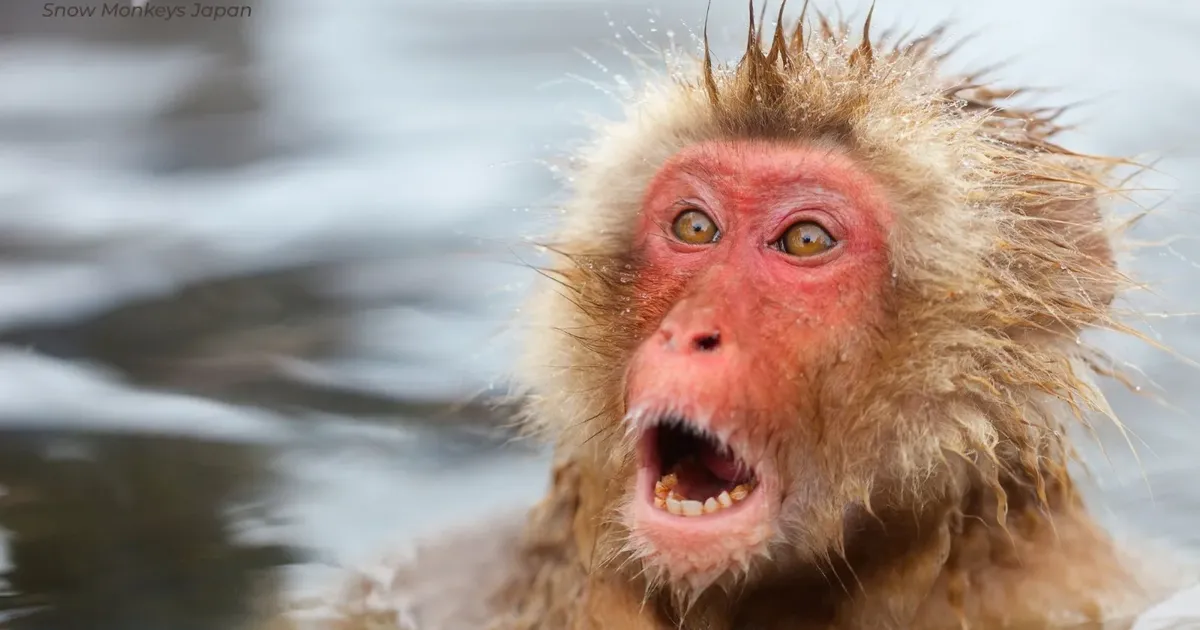
In January the Yokoyu valley in northern Nagano lies under a metre of snow. Steam drifts off the cliffs that gave the place its name, Jigokudani, or “Hell’s Valley”. In a stone pool beside the river, a dozen red-faced monkeys sit in hot water up to their chins with their eyes half closed and frost on their heads. It looks staged, but it isn’t. The real story is better than “wild monkeys discovered a spa”, though, and it involves a curious young female, a hotel bath and a lot of careful human management.
This guide covers what scientists know about the snow monkeys: what they are, how they survive the cold, why only one troop bathes, how their society works and which popular “facts” are myths. It also covers what you need to see them yourself: the best months, the new 2026–27 ticket rules and the fee rise, park etiquette and how to get there from Tokyo.
Quick answer
- “Snow monkey” is a nickname for the Japanese macaque (Macaca fuscata). It’s the world’s most northerly non-human primate, and the IUCN lists it as Least Concern (2020 assessment).
- The only place where wild monkeys bathe in a hot spring is Jigokudani Yaen-koen in Yamanouchi, Nagano. The habit began in 1963 and the park opened in 1964.
- They bathe to keep warm, mostly in cold weather. A 2018 Kyoto University study linked bathing to lower stress-hormone levels in females.
- Best odds of snow and bathing: January–February. Babies: late April–June. Autumn sightings are the least reliable.
- Admission is ¥800 adult until 30 November 2026. From 1 December 2026 it’s reported as ¥880 online / ¥1,000 at the gate. Online ticket holders get priority entry December–April (as of October 2026; check before you travel).
Check Availability
What is a snow monkey?
A snow monkey is a Japanese macaque (Macaca fuscata), Japan’s only native monkey. It isn’t a separate species. English speakers coined the nickname because many of these monkeys live where snow covers the ground for months.
In Japanese the animal is Nihonzaru (ニホンザル), or simply saru. It’s a stocky, grey-brown Old World monkey with a bare pink-to-red face and rump and a stubby tail, usually under 10 cm. The short tail helps in the cold, because less exposed skin means less heat lost.
Scientists recognise two subspecies:
| Subspecies | Where | Notes |
|---|---|---|
| M. f. fuscata (Hondo macaque) | Honshu, Shikoku, Kyushu | The snow monkeys of Nagano belong here |
| M. f. yakui (Yakushima macaque) | Yakushima island only | Smaller and darker; the species’ southern limit |
There are no wild macaques on Hokkaido or Okinawa.
Why do snow monkeys live in the snow?
They don’t go looking for snow. They live in Japan’s mountain forests, and much of that range is among the snowiest inhabited land on Earth. Thick fur, autumn fat, huddling and, at one site, hot water get them through the winter.
No other non-human primate lives farther north. The species reaches its northern limit on the Shimokita Peninsula in Aomori, at the tip of Honshu, more than 500 km north of Jigokudani. Winter at Jigokudani is hard enough. The park says temperatures stay below zero and drop to about −10 °C. Up to 40–50 cm of snow can fall in a night, and in January–February the snowpack is over a metre deep. The valley is so deep that winter sunshine barely reaches the bottom.
How they cope:
- Fur: the coat grows much thicker for winter.
- Fat: they feed heavily in autumn, when nuts and fruit are plentiful.
- Winter diet: with the forest buried, they live on buds and bark, according to the park.
- Huddling: tight balls of grooming, huddled bodies are a common winter sight.
- Hot water: at Jigokudani, and only there, they soak.
Why do snow monkeys bathe in hot springs?
They bathe to stay warm. The habit started by chance in 1963, spread through the troop by copying and is now passed down the generations.
How it started. Kyoto University’s account says a young female was seen in the outdoor hot spring of a nearby inn, the Korakukan, on a snowy day in 1963. Others copied her. The park’s own history calls her “a very young monkey”. To keep the human bath hygienic, a separate pool was built for the monkeys, and the park opened in 1964. It’s a textbook learned tradition: one innovator, others copying, and the habit passed on to later generations.
The science. Rafaela Takeshita, Fred Bercovitch, Kodzue Kinoshita and Michael Huffman of Kyoto University published their study in Primates in April 2018. They followed 12 adult females through the spring birth season (April–June) and the winter mating season (October–December), and measured stress hormones in their droppings. They found that:
- females bathed more in winter, especially in colder weeks
- bathing was linked to lower stress-hormone levels. “As in humans, the hot spring has a stress-reducing effect in snow monkeys,” Takeshita said
- dominant females spent more time in the pool, so rank buys access to the hot water. They also had higher stress from more frequent fights
- around 500 visitors a day at the time had no measurable effect on the monkeys’ stress hormones
What the bathing is not
- Not universal. The park calls itself “the only place in the world where monkeys bathe in hot springs”. The other well-known bathing troop, at Hakodate, is captive (see below).
- Not year-round. The park says the monkeys don’t use the bath at all hours or all year, and they’re “reluctant” in warm seasons.
- Not every monkey. On any given day, only some of the troop is in the water.
- Not washing. They aren’t cleaning themselves. They’re warming up, and some visibly doze off.
Are the snow monkeys really wild?
Yes, but they’re fed. They’re free-living wild macaques with no cages or fences, and the park draws them in with a controlled feeding routine.
The park is open about this. Staff feed barley, soybeans or apples, depending on the weather and season. The park describes the food as “a little bit better” than what the monkeys find in the mountains and limits portions to avoid overfeeding. Feeding times aren’t fixed or announced. Visitors may not feed the monkeys, and no feed is sold. The rest of the time the troop forages in the surrounding forests of Joshin’etsu Kogen National Park, and the monkeys can and do skip the park altogether.
We’d call it one of the better-run wildlife encounters in Japan. Feeding is controlled, contact is banned and the rules are enforced. But it isn’t untouched wilderness, and you’re better off knowing that before you go. Our honest look at whether the park is worth it weighs the feeding question in more detail.
How big are snow monkeys, and how long do they live?
Adults are about the size of a medium dog. Males average around 11 kg and females around 8 kg, and northern animals tend to be heavier. Published figures vary quite a lot by population and source.
| Measure | Typical figure |
|---|---|
| Weight | Males ~11 kg, females ~8 kg (averages; individuals vary widely) |
| Head-and-body length | ~50–60 cm |
| Tail | ~8–10 cm |
| Lifespan | Park: 25–30 years on average. Recorded maximums: about 28 (males) and 32 (females) |
| Maturity | Females ~4–5 years, males ~5–6 years (park figures) |
What do snow monkeys eat?
They eat mostly plants, and the menu changes with the seasons. The park says they don’t eat meat or fish.
In spring they eat young leaves and shoots, in summer fruit and insects, in autumn nuts, seeds and fruit, and in winter buds and bark. The park adds that they also eat soil through the year for minerals. This flexibility lets the species live everywhere from subtropical Yakushima to snowbound Aomori. It also brings them into conflict with farmers. A 2021 review in Mammal Study (Enari) found that more than 20,000 macaques a year are now culled for pest control, the highest level on record.
How do snow monkey troops work? Is there a “boss monkey”?
Troops are built around related females, who stay in the troop they’re born into for life. Males leave and move between troops. There is a ranking, but the “boss monkey” idea is greatly exaggerated.
The park describes a troop as several males, two to three times as many females and their young. A troop can range from a few dozen to more than 100 animals. Mothers, daughters and sisters form family lines that eat, sleep and groom together and back each other up in fights. Males mature at about 5–6 years and usually leave, often living alone for a while before joining another troop.
The park itself pushes back on the “boss” myth. It notes that males differ little in size, that the top male usually rests in the shade, and that rank is “just a temporary thing”. Jigokudani instead gives its top male the title ryu-oh, “Dragon King”. Because paternity is unknown, no male acts as a particular infant’s father. The park says the males act as protectors of the whole troop instead.
When are baby snow monkeys born?
At Jigokudani, most babies are born from late April through June, after mating in autumn.
Life-cycle facts from the park
- Females have one baby, usually every other year, and roughly 10 in a lifetime.
- Births usually happen between midnight and dawn.
- Newborns start toddling at about 7 days old.
- In autumn, faces and rumps turn a deeper red for the mating season.
For baby photos, go from mid-May to July. Early summer at Jigokudani, with green leaves, tiny infants and thinner crowds, is underrated.
How smart are snow monkeys?
Very smart. Japanese macaques gave science its most famous example of animal “culture”, and the Jigokudani bathing habit is another.
- Sweet-potato washing on Koshima (1953). Researchers fed macaques sweet potatoes on the beach of Koshima, an islet off Miyazaki in Kyushu. A young female, later named Imo, began washing the sand off them in water. The habit spread first to her playmates and her mother, then through the troop. Masao Kawai’s 1965 paper in Primates is the classic account. Imo later worked out how to separate wheat from sand by throwing it into water. Primatologists still debate how “cultural” this is, but it remains the textbook case.
- The “hundredth monkey” myth. The story goes that once enough monkeys (the “hundredth”) learned potato washing, the behaviour jumped spontaneously to other islands. Lyall Watson popularised it in the late 1970s. Ron Amundson took it apart in Skeptical Inquirer in 1985, using the original research. The data never showed any such jump.
- Snowballs. Young macaques roll and carry snowballs, apparently just for fun. Fresh-snow days at Jigokudani are a good time to watch.
- A research legacy. Japanese primatology began at Koshima on 3 December 1948, when Kinji Imanishi and his Kyoto University students went there to watch the monkeys. Their method of naming and following individuals across generations changed how primates are studied worldwide.
Are snow monkeys endangered?
No. The IUCN Red List classes Macaca fuscata as Least Concern (2020 assessment by Kunio Watanabe and Ken’ichi Tokita).
There’s no reliable current total. The figure still quoted most often is a 1989 estimate of about 114,000 wild Japanese macaques. The species faces local pressures, including broken-up habitat and conflict with farmers, and some isolated groups are protected, such as those on the Shimokita Peninsula. Be sceptical of websites that call the snow monkey “endangered”. That contradicts the IUCN listing.
Where can you see snow monkeys?
The wild bathing snow monkeys live at Jigokudani Yaen-koen (地獄谷野猿公苑, “Hell’s Valley Wild Monkey Park”) in Yamanouchi, northern Nagano. It’s the only place to see wild macaques soak in a hot spring.
- Setting: the Yokoyu River valley at 850 m, upstream from Shibu and Yudanaka Onsen and below the Shiga Kogen ski area. On the way in you pass the steaming Jigokudani geyser-like vent and the old Korakukan inn.
- How many monkeys: “over 160”, according to Nagano’s official tourism site. The park doesn’t publish a count, and only some of the troop bathes on any winter day.
- Are monkeys guaranteed? No. The park is open every day, but it warns that the monkeys “may not show up at all on certain days” and that sightings are “particularly sporadic in the autumn”.
- Check before you go: the official site runs a live camera and a weekly monkey appearance forecast.
Our Jigokudani Snow Monkey Park guide covers the visit in detail.
When is the best time to see snow monkeys?
January and February give the best odds of snow and of long soaks. December and March can work, but snow is less certain. Late April–June is best for babies. Don’t count on autumn.
| Season | Months | Snow | Bathing | Monkey reliability | Crowds | Verdict |
|---|---|---|---|---|---|---|
| Deep winter | Jan–Feb | Very likely | Most frequent, longest soaks | High | Very heavy (avg ~4,000 visitors a day Jan–Mar, reported) | Best for the classic shot; buy a web ticket |
| Shoulder winter | Dec, Mar | Likely but variable | Common on cold days | High | Heavy, especially at New Year | Good; check the live cam |
| Spring | Apr–Jun | Melting, then none | Rare | Good | Moderate; Golden Week busy | Best for babies |
| Summer | Jul–Aug | None | Rare | Good | Light to moderate (Obon busy) | Playful youngsters, green valley, cooler than Tokyo |
| Autumn | Sep–Nov | First snow possible in late Nov | Occasional on cold days | Lowest | Light | Lovely leaves, real risk of a no-show |
Time of day: go early. The trail is quieter around opening time. Weekends, public holidays and New Year are the busiest days. Month-by-month detail is in best time to see the snow monkeys.
Do you need tickets in advance?
For winter, in practice, yes. The park now sells date-specific online tickets through its Webket system. From December to April, online ticket holders get priority entry. On crowded days, visitors without a ticket may have to wait or may be refused.
Tickets and hours at a glance (as of October 2026; check before you travel)
- Hours: April–October 8:30–17:00 · November–March 9:00–16:00. Open every day, but the park may close without notice for weather or disasters.
- Until 30 November 2026: adult (18+) ¥800 · child (elementary–high school) ¥400 · under 6 (pre-school) free with a guardian. Annual pass ¥5,000 / ¥2,500.
- From 1 December 2026: the park charges ¥880 for an online (Webket) ticket or ¥1,000 at the gate (children ¥440 / ¥500), according to the park’s 20 September 2026 notice as reported by japan-guide. Check the official site before you go.
- Annual pass from 1 December: reported as ¥6,000 for adults by one secondary source; the child price hasn’t been published.
- Online sales: the park announced online tickets on 6 August 2026, with sales reported to have started on 10 August. Tickets are reported to go on sale three months before your visit date.
- Payment at the gate: credit cards and e-money are accepted. QR-code payments are not.
Why the change? Winter crowds outgrew the narrow site. Peak-season visits have averaged about 4,000 people a day in January–March, according to Snownavi. AFP reported in June 2026 that the park was considering a cap of about 2,000 visitors a day. The park itself hasn’t announced a number.
Snow Monkey Pass: Nagaden’s combined transport-and-entry pass is separate from the web ticket. Winter 2026–27 prices haven’t been announced yet. Last winter’s were ¥5,100 (train) and ¥6,800 (bus). The pass isn’t sold in October–November.
The park guide walks through buying a web ticket step by step.
What are the rules at the snow monkey park?
Don’t feed, touch or stare at the monkeys, and keep your distance. No pets, selfie sticks or drones are allowed, and you can’t put a camera in the bath. These rules come from the park’s official caution page, and staff can ask rule-breakers to leave.
- Never show or give food. Keep snacks zipped away.
- Don’t touch or startle the monkeys, especially babies. A frightened infant calls the adults to defend it.
- Don’t stare into their eyes. To a macaque, staring and an open mouth mean hostility.
- Step away if a curious youngster comes close.
- No pets of any kind, including guide, hearing and assistance dogs.
- Photos and video are allowed, including flash. Selfie sticks, drones and putting a camera in the bath are banned.
- Humans may not bathe. It’s an observation site, not an onsen.
The official page doesn’t ban tripods outright. On a packed winter poolside, though, a tripod is impractical and unpopular, so we’d leave it behind.
How hard is the walk, and is it accessible?
It’s a forest trail of about 1.6–2 km from Kanbayashi Onsen, taking 30–40 minutes each way. Allow longer on snow. The park’s official figure is about 2 km and 30 minutes. The trail is unpaved, with stairs and slopes, and it isn’t suitable for wheelchairs or strollers.
In winter the path is packed snow and ice. Wear waterproof snow boots and bring simple crampons or microspikes. If you’re travelling with small children, hold their hands at all times, as the park asks. The Jigokudani car park on the far side (¥500) is reached by a narrow road from Shibu Onsen and is closed in winter (roughly December to March). The park also asks winter visitors to use public transport, not cars.
How do you get to the snow monkeys from Tokyo?
Take the Hokuriku Shinkansen to Nagano (from about 80 minutes). Then take either the Nagaden express bus to the Snow Monkey Park stop, or the Nagaden train to Yudanaka and a local bus. Finish with the forest walk. Allow roughly 3–3.5 hours each way.
| Leg | Option | Time | Fare (one way, adult) |
|---|---|---|---|
| Tokyo → Nagano | Hokuriku Shinkansen | From ~80 min | ¥8,450 reserved / ¥7,920 non-reserved (e-ticket reserved ¥8,250) |
| Nagano → Snow Monkey Park stop | Nagaden express bus (East Exit, stop 23/24) | ~45 min (up to 60 in snow) | ¥3,000 in winter / ¥2,000 the rest of the year |
| Nagano → Yudanaka | Nagaden limited express | ~45 min | ¥1,760 (¥1,660 + ¥100 limited-express ticket) |
| Yudanaka → Snow Monkey Park stop | Local bus | ~10 min | ¥390 (check the fare chart on board) |
| Kanbayashi → pool | On foot | 30–40 min | — |
Fares as of October 2026; check before you travel.
- JR passes cover the Shinkansen only, not Nagaden trains or buses.
- Express bus tickets: buy before boarding at the Aruyo ticket office (Nagano Station East Exit, 1F) or online. Don’t count on paying cash on the bus. The winter 2026–27 timetable is reported to run from 5 December 2026 to 5 April 2027.
- Day trip or overnight? A day trip works if you leave Tokyo before 8:00 in winter. Otherwise the 16:00 closing time and queues squeeze your visit. A night in Shibu Onsen or Yudanaka turns a rushed day into the highlight of the trip, with a quiet early morning at the pool.
Every route, fare and timetable is in how to get from Tokyo to the Snow Monkey Park.
Disclosure: Some links on this page are GetYourGuide affiliate links. If you book through them we may earn a commission at no extra cost to you.
Prefer not to plan it yourself? GetYourGuide sells private-driver day trips from Tokyo and small-group day tours that start in Nagano. The most reviewed from Tokyo is the Tokyo private Snow Monkey Park and Nagano day trip (from $102 per person, 4.9/5 from more than 200 reviews). If you’re already staying in Nagano, the Snow Monkeys & Snow Fun in Shiga Kogen day tour adds an afternoon in the snow above the valley (from $164 per person, rated close to 5/5 from 55 reviews). On peak winter weekends, a tour that handles transport and entry for you is easiest to justify. No tour can promise monkeys or bathing, though. We compare the tour types in which snow monkey tour from Tokyo is right for you.
What should you wear and pack in winter?
Pack warm, waterproof gear and grip for your boots, and expect temperatures well below zero.
- Feet: waterproof snow boots or insulated hiking boots, plus crampons or microspikes. Buy these in Tokyo or Nagano instead of relying on the trailhead.
- Layers: a thermal base layer, a fleece and a windproof, waterproof shell. Add a hat.
- Hands: thin liner gloves under mittens let you use a phone or camera.
- Power: a spare battery, because cold drains batteries fast.
- Lens cloth: steam from the pool fogs lenses.
- Bag: use one that closes, with food sealed inside.
Photography tips for the snow monkeys
Shoot at eye level from the path with a moderate zoom, and wait for falling snow and steam. Never lean in.
- Lens: the monkeys are close. A 24–105 mm covers the scene, and a 70–200 mm picks out faces. A long telephoto is overkill.
- Exposure: snow fools camera meters. Dial in +0.7 to +1.3 EV to keep it white.
- Shutter: 1/500 s freezes falling snow, while 1/30–1/60 s turns flakes into streaks. Steam shows best when backlit.
- Frosted faces: the classic shot of snow on a dozing monkey’s head happens during and just after snowfall, so watch the forecast and the live cam.
- Look beyond the pool: grooming, mothers with infants and snowball play often make better pictures.
- Etiquette: flash is allowed but use it sparingly, and don’t hog the poolside rail.
Where else in Japan can you see monkeys?
If Nagano doesn’t fit your route, try Arashiyama in Kyoto, which is the easiest. Takasakiyama in Oita has the biggest troops. Hakodate has captive monkeys that bathe, and Yakushima has fully wild ones. Only Jigokudani has wild monkeys bathing in a hot spring in the snow.
| Place | Region | Monkeys | Bathing? | Entry (adult) | Best for |
|---|---|---|---|---|---|
| Jigokudani Yaen-koen | Yamanouchi, Nagano | 160+ wild, fed | Yes, wild, mainly winter | ¥800 → ¥880 online / ¥1,000 gate from 1 Dec 2026 (reported) | The classic snow-and-onsen scene |
| Arashiyama Monkey Park Iwatayama | Kyoto | Wild, fed | No | ¥800 (child 4–15 ¥400), cash only | Easy add-on to Arashiyama; city views after a 20–30 min climb |
| Takasakiyama Natural Zoo | Oita (near Beppu), Kyushu | 2 troops: 514 + 246 (Oita City count, late 2025) | No | ¥520 | Sheer numbers |
| Hakodate Tropical Botanical Garden | Hokkaido | Captive troop in an enclosure | Yes, captive, about December to Golden Week | ¥300 | Bathing monkeys on a Hokkaido trip |
| Yakushima | Kagoshima | Wild M. f. yakui | No | Free | Wild monkeys that aren’t fed, seen at the roadside |
| Choshikei Monkey Park | Shodoshima, Kagawa | — | No | — | Closed indefinitely (staff shortage, per japan-guide) |
Prices as of October 2026; check before you travel.
Nearly every Japanese “monkey park” works the same way: wild macaques are fed at a fixed site so people can watch them. What sets Jigokudani apart is the hot spring and the snow, not an absence of feeding.
Snow monkeys in pop culture
Jigokudani’s bathers went global through a 1970 LIFE magazine cover (according to the park) and Ron Fricke’s wordless 1992 film Baraka. The 1998 Nagano Winter Olympics added to their fame, and so did a long run of wildlife documentaries. In wider Japanese culture, the “see no evil, hear no evil, speak no evil” carving at Nikko’s Toshogu shrine is the country’s best-known monkey image.
Snow monkey myths vs reality
| Myth | Reality |
|---|---|
| “Snow monkeys are their own species.” | It’s a nickname for the Japanese macaque, Macaca fuscata. |
| “They’ve always bathed in hot springs.” | The habit began in 1963 at one site and spread by copying. |
| “All snow monkeys bathe.” | Only the Jigokudani troop does in the wild, and not every individual. |
| “They bathe every day, all year.” | Mostly in cold weather. The park says they’re reluctant in warm seasons. |
| “It’s untouched wilderness.” | The monkeys are wild but are fed to draw them in. |
| “You’re guaranteed to see them.” | Some days they don’t come at all, especially in autumn. |
| “A boss monkey rules the troop.” | Troops centre on related females, and rank is often temporary. |
| “They’re endangered.” | The IUCN lists them as Least Concern. |
| “The ‘hundredth monkey’ proved telepathic learning.” | That’s a 1970s myth that the Koshima research doesn’t support. |
| “You can bathe with them.” | Bathing with the monkeys is strictly prohibited. |
15 quick snow monkey facts
- They’re the world’s most northerly monkeys, reaching the Shimokita Peninsula at the tip of Honshu.
- Jigokudani sits at 850 m, and winter lows there reach about −10 °C.
- The hot-spring habit dates from 1963, and the park opened in 1964.
- A young female started it in a human inn’s outdoor bath.
- The monkeys got their own pool for hygiene reasons.
- Higher-ranking females get more time in the hot water.
- Bathing is linked to lower stress hormones (Kyoto University, 2018).
- Faces and rumps turn redder in the autumn mating season.
- Babies are usually born between midnight and dawn.
- A female has roughly 10 babies in her lifetime.
- Females stay in their birth troop for life, while males move on.
- Jigokudani calls its top male ryu-oh, “Dragon King”.
- Young macaques make snowballs for fun.
- They don’t eat meat or fish.
- Even guide dogs are banned at Jigokudani, because dogs upset the monkeys.
Frequently asked questions
What is a snow monkey?
It’s the Japanese macaque (Macaca fuscata), Japan’s only native monkey and the world’s most northerly non-human primate. It’s not a separate species.
Where can I see snow monkeys bathing?
Wild snow monkeys bathe only at Jigokudani Yaen-koen in Yamanouchi, Nagano. Hakodate Tropical Botanical Garden on Hokkaido has captive macaques that bathe in winter.
Why do snow monkeys bathe in hot springs?
To keep warm. The habit began in 1963 and spread by copying. A 2018 Kyoto University study linked bathing to lower stress hormones in females.
Do the snow monkeys bathe all year?
No. They bathe mainly in cold weather, most often in January and February. The park says they’re reluctant to bathe in warm seasons.
When is the best time to see the snow monkeys?
January–February gives the best odds of snow and bathing, and late April–June is best for babies. Autumn is the least reliable season.
Are the monkeys guaranteed to be there?
No. The park warns that the monkeys may not appear on some days, especially in autumn. Check the official live cam and weekly forecast.
How much does Jigokudani cost?
¥800 for adults and ¥400 for children until 30 November 2026. From 1 December 2026 it’s reported as ¥880 online or ¥1,000 at the gate (children ¥440 / ¥500). Check before you travel.
Do I need to book tickets in advance?
For winter, effectively yes. From December to April, people with date-specific web tickets get priority, and on crowded days walk-ins may be refused.
What are the opening hours?
8:30–17:00 from April to October and 9:00–16:00 from November to March, every day. The park may close without notice in bad weather.
How long is the walk?
About 1.6–2 km, or 30–40 minutes each way from Kanbayashi Onsen. In winter it’s icy, so wear snow boots and bring crampons. It isn’t suitable for wheelchairs or strollers.
Can you visit the snow monkeys as a day trip from Tokyo?
Yes, but it’s a long day: roughly 3–3.5 hours each way. Leave before 8:00 in winter, or stay overnight in Shibu or Yudanaka Onsen.
Can I touch or feed the snow monkeys?
No. Feeding, touching, staring, pets, selfie sticks and drones are all prohibited.
Are snow monkeys dangerous?
The Jigokudani troop is used to people and mostly ignores them, but they’re wild animals that can bite if threatened. Trouble usually starts with visible food, staring or getting too close to a baby.
Are snow monkeys endangered?
No. The IUCN lists the Japanese macaque as Least Concern (2020).
Practical info
Practical info — verified 2 October 2026 Jigokudani Yaen-koen (地獄谷野猿公苑), Yamanouchi-machi, Shimotakai-gun, Nagano Hours: Apr–Oct 8:30–17:00 · Nov–Mar 9:00–16:00 · open daily (may close without notice) Entry to 30 Nov 2026: adult ¥800 · child ¥400 · under 6 free with a guardian Entry from 1 Dec 2026 (reported): online ¥880 / ¥440 · gate ¥1,000 / ¥500 Tickets: date-specific Webket tickets; online holders get priority Dec–Apr Payment at gate: cards and e-money; no QR-code payments Getting there: Shinkansen Tokyo → Nagano (from ~80 min, ¥8,450 reserved) → Nagaden express bus (¥3,000 winter / ¥2,000 rest of year) or train to Yudanaka (¥1,760) + local bus (¥390) → walk about 1.6–2 km Not allowed: feeding, touching, pets (including assistance dogs), selfie sticks, drones, cameras in the bath, human bathing Before you go: check the official live cam and the weekly monkey appearance forecast Prices as of October 2026; check before you travel.
Sources
- Jigokudani Yaen-koen: About
- Jigokudani Yaen-koen: Guide (hours and fees)
- Jigokudani Yaen-koen: Caution (visitor rules)
- Jigokudani Yaen-koen: Feeding and the monkeys
- Jigokudani Yaen-koen: Society of the monkeys
- Jigokudani Yaen-koen: Life of the monkeys
- Jigokudani Yaen-koen: A year at Jigokudani
- Jigokudani Yaen-koen: Fee revision notice (20 Sep 2026)
- Jigokudani Yaen-koen: Online ticket information
- Kyoto University: Hot springs and stress in snow monkeys (2018)
- Go NAGANO: Jigokudani Monkey Park
- Wikipedia: Japanese macaque
- Wikipedia: Hundredth monkey effect
- Japan Monkey Centre: History of Japanese primatology
- Kawai (1965), Primates 6(1): Koshima sweet-potato washing
- Enari (2021), Mammal Study 46(2): Human–macaque conflicts
- japan-guide: Jigokudani Monkey Park
- japan-guide: Takasakiyama
- japan-guide: Choshikei Monkey Park
- Oita City: Takasakiyama monkey count 2025 (PDF)
- Arashiyama Monkey Park Iwatayama: Tickets and prices
- Tabi-mag: Hakodate Tropical Botanical Garden monkey onsen
- Rurubu: Hakodate Tropical Botanical Garden
- Snownavi: Jigokudani online tickets (Aug 2026)
- Snow Monkey Resorts: Nagaden express bus
- Snow Monkey Resorts: Snow Monkey Pass
See the Snow Monkeys — and Be Back in Tokyo by Evening
A private vehicle both ways, a 30-minute forest walk in, and unhurried time at the hot spring. Rated 4.9/5 by 220 guests. Free cancellation up to 24 hours before.
Check Availability & Book